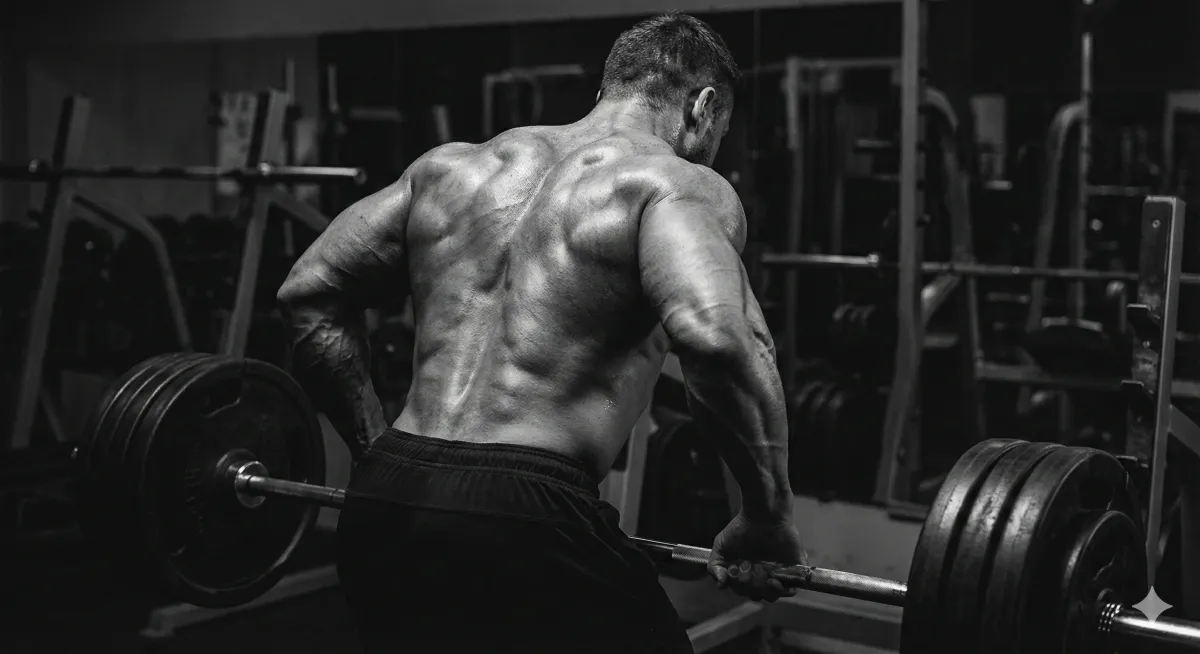
The Pull Protocol: Constructing the Fasted Foundation
Article #3: The Pull Protocol: Constructing the Fasted Foundation
By Connor with Honor
Medical Disclaimer: The Deadlift and other heavy pulling movements place significant demand on the central nervous system and spine. Performing these in a fasted state requires impeccable form and self-awareness. Consult a medical professional before beginning heavy lifting. If you have a history of back injuries, seek in-person coaching. This article is for motivation and education only.
Introduction: The Easiest Pull vs. The Hardest Pull
Human beings are wired to pull things toward their mouths. It is the easiest movement pattern in existence. See food, grab food, pull to face, consume. It requires zero discipline. It is instinct.
The hardest movement pattern is the opposite. It is bending down and pulling a immense weight off the floor against the unforgiving force of gravity, when every fiber of your being wants to quit.
In Article #2, we discussed "Pushing." Pushing is reactive. You push things away to protect yourself. Pushing the table away is an act of defense.
Today, we talk about "Pulling." Pulling is active. Pulling is taking ownership. You pull weight to build a foundation. You pull success toward you.
The "Pull" workout—focusing on the back, traps, rear delts, and biceps—is where the true work happens. These are the muscles you cannot see in the mirror when you brush your teeth. Therefore, training them requires a different kind of discipline. It requires the same discipline needed to fast when no one is watching.
We are going to construct the foundation of your physique while your stomach is empty, using the most primal lifts in the human arsenal.
Part 1: The Psychology of the "Unseen" Muscles
Why do so many guys in the gym have massive chests and arms, but rounded shoulders and weak backs? Because they only train what they can see. They are chasing the immediate gratification of the mirror pump.
Fasting is the antidote to immediate gratification. You deny yourself the immediate pleasure of food for the long-term reward of health and a lean physique.
Training your back is the physical manifestation of that mindset. You are investing sweat and pain into the rear of your body—the foundation—knowing that it will pay off in posture, overall strength, and a powerful silhouette, even if you can't admire it during the set.
When you are fasted, this psychological battle is amplified. You are tired. You don't have a "pump." Why bother doing heavy rows if you can't see the result right now? You bother because you are no longer ruled by impulse. You are ruled by protocol.
A strong back is the sign of a disciplined lifter. A wide, thick back built while fasting is the sign of a master.
Part 2: The Fasted Physiology of "The Pull"
Pulling movements, particularly the deadlift, tax the body differently than pushing movements. They are more systemic. A heavy bench press makes your chest tired; a heavy deadlift makes your soul tired.
Understanding how fasting affects this is crucial to avoid injury and maximize growth.
1. The Central Nervous System (CNS) Drain
Your CNS is the electrical wiring that tells your muscles to fire. Heavy pulling movements, because they utilize so much musculature at once, put a massive strain on the CNS.
When you are fasted, your CNS is highly alert due to adrenaline (the "hunter" state), but it fatigues sharply. You do not have the glucose buffer to handle high-volume pulling. If you try to do 5 sets of 10 deadlifts while fasted, your form will break down, and you will get hurt.
The Strategy: We must use low volume, high intensity, and long rest periods. We are looking for neural adaptation and mechanical tension, not metabolic exhaustion.
2. The HGH Recovery Factor
The back muscles are large and dense. They require significant resources to repair. As we have established, fasting spikes Human Growth Hormone (HGH). HGH is vital for repairing connective tissue—tendons and ligaments.
Your back is a complex web of connective tissue. By training heavy while fasted, you are micro-tearing these tissues in an environment flooded with the exact hormone needed to repair them stronger. You are breaking down to build up with superior materials.
3. The Core Bracing Advantage
Have you ever tried to deadlift after a large meal? You feel bloated. It's hard to get a deep breath into your belly to brace your core.
Fasted pulling offers a unique mechanical advantage: the empty stomach. You can achieve a tighter, deeper abdominal brace (intra-abdominal pressure) because your digestive tract is empty. This protects the spine and allows for a more efficient transfer of force from the floor to the bar.
Part 3: The King of Lifts – The Deadlift Workshop
If you could only do one exercise for the rest of your life to build a powerful physique, it would be the Deadlift.
It is the ultimate "put up or shut up" movement. The deadlift doesn't lie. The weight either leaves the floor, or it doesn't.
In a fasted state, the deadlift is a spiritual experience. It is just you, the iron, and the hunger.
The Protocol: 3 Working Sets Only. Because of the CNS drain, we do not do 5 sets to failure here. We do warm-ups, and then 3 incredibly heavy sets of 3-5 reps. That’s it. If you can do more, the weight was too light.
The Setup (The Most Important Part)
Most people fail the lift before the bar leaves the ground.
The Stance: Feet hip-width apart. The bar should be over the middle of your foot (where your shoelaces are tied). Do not have the bar touching your shins yet.
The Grip: Bend at the hips and grip the bar just outside your legs. Do not move the bar.
The Wedge (Crucial): Pull your shins forward until they touch the bar. Now, squeeze your chest up without lowering your hips. You are wedging yourself between the floor and the bar. You should feel immense tension in your hamstrings. You are a coiled spring.
The Fasted Brace: Take a massive breath into your belly, not your chest. Push your abs out against an imaginary belt. Hold that breath.
The Pull
Taking the "Slack" Out: Before you rip the bar up, pull up gently until you hear the "clank" of the bar against the weights. The bar should be tight.
Push the Floor Away: Do not think about pulling the bar up. Think about leg pressing the floor away from you. Drive through your heels.
The Hinge: As the bar passes your knees, thrust your hips forward powerfully to meet the bar. Squeeze your glutes explosively at the top.
The Descent
Do not drop the bar (unless your gym requires it). Control the weight down. Hinge at the hips first. Once the bar passes your knees, bend the knees to set it down.
Do not bounce the weight off the floor. Reset every single rep. You are pulling dead weight, not bouncing weight.
Part 4: The Vertical Pull – Earning Your Bodyweight
Once the heavy work of the deadlift is done, we move to vertical pulling to build width (the V-taper).
The Pull-Up (or Chin-Up)
Target: Lats, Biceps, and Reality Checks
The pull-up is the ultimate equalizer. It doesn't matter how much you bench; if you cannot pull your own chin over a bar, you are not functionally strong.
This is where fasting shines. Every pound of fat you lose while fasting is one less pound of useless weight you have to pull against gravity. You will find your pull-up performance skyrockets as you lean out.
The Protocol: 4 Sets to Failure.
Form Check: Start from a dead hang. No swinging (kipping). Pull your chest to the bar, driving your elbows down toward your back pockets. Lower yourself all the way down under control.
If you can't do one: Do negative reps. Jump up to the top position, hold for a second, and lower yourself as slowly as possible (aim for 5-8 seconds). This builds the required strength fast.
The Fasted Mindset: Imagine the floor is lava. The only safety is above that bar. Pull like your life depends on it.
Part 5: The Horizontal Pull – Building Thickness
Vertical pulling builds width; horizontal pulling builds thickness. This is what gives your back that 3D, armored look.
The Barbell Row (or Heavy Dumbbell Row)
Target: Mid-back, Traps, Rear Delts, Rhomboids
The Protocol: 4 Sets of 8-12 Reps (To Failure)
The Setup (Barbell): Bend at the hips, keeping your back tabletop flat. Knees slightly bent. Grip the bar with a double overhand grip.
The Execution: Pull the bar explosively toward your lower chest/upper stomach.
The Squeeze: This is where the magic happens. At the top of the movement, squeeze your shoulder blades together aggressively for a full second. Imagine trying to crush a walnut between your shoulder blades.
The Control: Lower the weight slowly. Do not let gravity drop it.
Caution during fasting: Because your lower back is tired from deadlifts, ensure your form is perfect. If your lower back rounds, switch to a chest-supported T-bar row or heavy dumbbell rows with one hand on a bench for support.
Part 6: The Weak Link – Grip Strength While Fasted
There is a specific challenge to fasted pulling: your grip will give out before your back does.
When fasting, you shed water and electrolytes. This can sometimes make your hands feel dry and slippery, or conversely, clammy. Furthermore, grip strength is often a leading indicator of CNS fatigue.
If you cannot hold the weight, you cannot train the muscle. Do not let your forearms dictate your back growth.
The Solutions:
Chalk: Essential. Liquid chalk if your gym doesn't allow blocks. It dries the sweat and increases friction.
The Hook Grip: For deadlifts, wrap your thumb around the bar first, then wrap your fingers over your thumb. It hurts at first, but it is incredibly secure.
Straps: Do not be afraid to use straps on your heavy sets. There is a macho nonsense idea that straps are "cheating." If your back can row 250lbs for 10 reps, but your grip fails at 6 reps, you are cheating your back out of growth. Use straps on your heaviest sets of rows and deadlifts so you can take the target muscle to true failure.
Conclusion: The Metaphor of the Pull
The "Pull" workout is a perfect metaphor for the fasting lifestyle.
When you deadlift, the weight does not want to move. It is content to stay on the floor. You have to apply force, tension, and will to change its state.
When you are fasting, your old habits do not want to move. Your body wants the easy comfort of food. It is content to stay fat and sated. You have to apply force, discipline, and will to change your state.
Every time you pull a heavy bar from the floor while your stomach is growling, you are proving something to yourself. You are proving that your will is stronger than your instincts. You are proving that you are the master of your biology, not its slave.
Push away from the table. Pull the iron toward you.
In the next article, we will discuss the engine of the machine: Leg Day, and why training your largest muscle groups while fasted triggers a metabolic tidal wave that incinerates body fat.
Stay hungry. Stay strong.