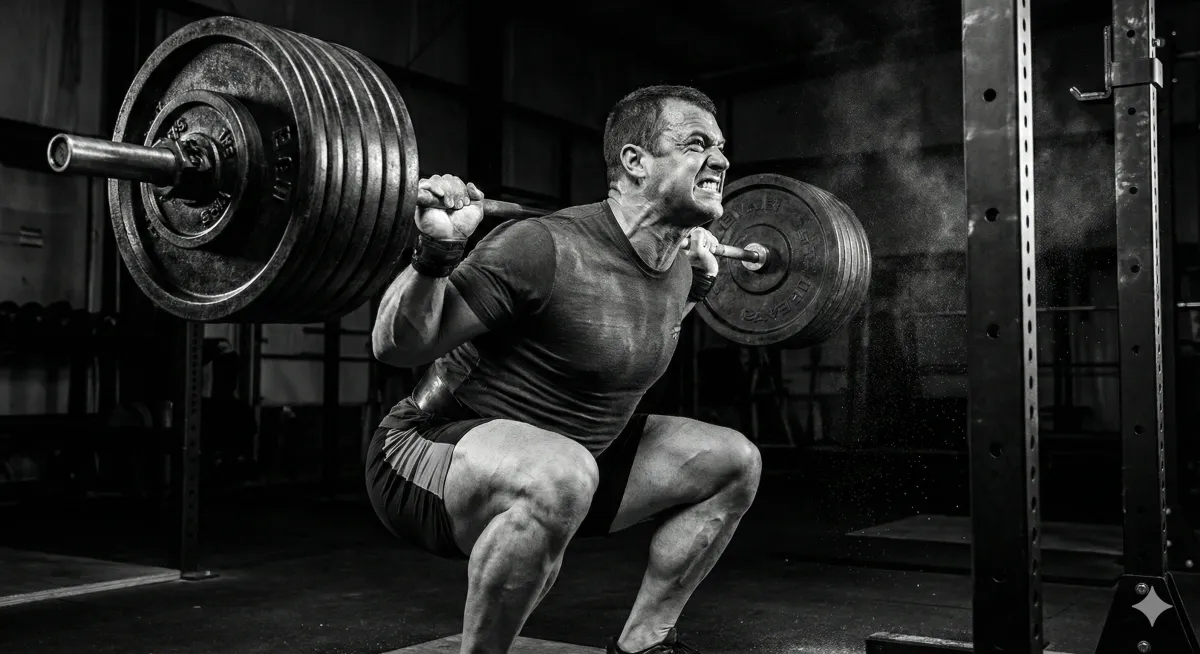
The Leg Protocol: Igniting the Fasted Metabolic Furnace
Article #4: The Leg Protocol: Igniting the Fasted Metabolic Furnace
By Connor with Honor
Crucial Medical Disclaimer: Leg day induces the highest systemic stress on the body. Training legs while fasted significantly increases the risk of hypoglycemia (low blood sugar), orthostatic hypotension (dizziness upon standing), and fainting under heavy loads. Do NOT attempt heavy barbell squats fasted if you are new to fasting or lifting. Always have a spotter. If you feel dizzy, sit down immediately and break your fast with fast-acting glucose. This guide is for advanced athletes who know their bodies.
Introduction: The Sanctuary of Pain
You can fake a chest workout. You can half-ass a bicep workout and still get a pump. You cannot fake leg day.
The legs house the largest muscle groups in the human body: the quadriceps, the hamstrings, and the glutes. They are half of your mass. Training them requires half of your blood volume and all of your will.
Now, imagine doing that when you haven't eaten in 20 hours.
This is where most people check out. This is where the "fasting is good for you" crowd clocks out and grabs a banana. But you are still here. You are here because you don't want average results. You want to know what happens when you take the body's biggest engines and force them to run without external fuel.
We are going to explore the Leg Protocol. This is not just about building bigger quads. This is about lighting a metabolic furnace so hot that your body has no choice but to incinerate visceral fat to survive the onslaught. This is the hardest thing you will do all week.
Part 1: The Systemic Shock of Fasted Legs
Why is leg day so much harder than chest day? It comes down to systemic load. When you bench press, you are stressing your upper body. When you squat, you are stressing everything from your neck down to your ankles. Your heart rate spikes higher, your central nervous system (CNS) lights up like a Christmas tree, and the oxygen demand is immense.
When you perform this level of exertion in a fasted state, unique physiological phenomena occur that do not happen when you are fed.
1. The Super-Spike of HGH and Testosterone
We have discussed Human Growth Hormone (HGH) in previous articles. It is the muscle protector.
Studies suggest that the magnitude of the HGH release during exercise is dependent on the intensity of the exercise and the amount of muscle mass recruited. Compound leg movements recruit the most mass at the highest intensity.
When you combine the baseline HGH boost from fasting with the acute HGH spike from heavy squats, you create an incredibly potent anabolic environment. Your body screams, "We are under severe threat! Protect the muscle tissue at all costs and mobilize fat stores for immediate energy!"
Furthermore, heavy, multi-joint leg movements are known to acutely increase circulating testosterone levels, further aiding in the anabolic response.
2. The Glycogen Void and Fat Mobilization
Your leg muscles hold massive amounts of glycogen (stored carbohydrates). When you train legs fed, you burn through that glycogen.
When you train legs fasted (especially after 16-24 hours), muscle glycogen levels are already lower. Your body is forced to shift almost entirely to fat oxidation (burning fat for fuel) much faster during the workout.
But here is the magic: The post-workout effect. Because you have deeply depleted the largest glycogen reserves in your body, for the next 24-48 hours, almost every carbohydrate you eat will be preferentially shuttled into those hungry leg muscles to replenish stores, rather than being stored as body fat. You earn your carbohydrates on the squat rack.
3. EPOC: The Afterburn
Leg day creates the highest Excess Post-exercise Oxygen Consumption (EPOC). Your metabolism stays elevated for hours, sometimes days, after a brutal leg session as your body tries to return to homeostasis, repair tissue, and replenish fuel stores. Doing this fasted amplifies the effect.
Part 2: The Safety Protocols (Read This Twice)
Before we get to the lifts, we must address safety. Fasted leg day is dangerous if you are stupid.
When you stand up quickly after a heavy set of squats while fasted, your blood pressure can drop rapidly. This is called orthostatic hypotension. It leads to seeing stars, dizziness, and potentially passing out. Passing out with 300lbs on your back is a recipe for disaster.
The Fasted Leg Day Rules:
Sodium is Non-Negotiable: You must consume 1/2 to 1 teaspoon of high-quality salt with water 30 minutes before training. Sodium increases blood volume and helps maintain blood pressure.
Intra-Workout Electrolytes: Sip on water mixed with electrolytes (sodium, potassium, magnesium) throughout the workout. No sugar.
The "Sit Down" Rule: Between heavy sets of squats or leg press, do not walk around. Sit down. Let your heart rate recover without fighting gravity.
Leave 1 Rep in the Tank on Squats: On machines, go to absolute failure. Under a free barbell, when you are fasted, technical failure is absolute failure. Do not grind out a rep where your form breaks down. Your CNS is too fatigued to recover a bad lift.
Part 3: The Leg Protocol – The Workout
We will focus on four primary movements. Quality over quantity. The goal is to generate maximum tension and metabolic stress without doing so much volume that you become catabolic or injured.
1. The King: The Barbell Back Squat
Target: Quads, Glutes, Adductors, Core, Entire Body
The squat is not a leg exercise; it is a full-body exercise. In a fasted state, it is a test of mental fortitude.
The Protocol: Warm-ups, then 3 working sets of 5-8 reps. We keep the reps lower to focus on mechanical tension and avoid excessive cardiovascular strain that leads to dizziness.
The Setup: Step under the bar. Retract your shoulder blades to create a "shelf" for the bar. Take the deepest belly breath of your life and brace your core outward (intra-abdominal pressure). This brace protects your spine.
The Fasted Mindset (The Descent): As you lower yourself, do not just drop. Control the weight. Feel the tension building in your hips and hamstrings. You are stretching a powerful elastic band.
The Ascent: Drive your upper back into the bar. Do not lead with your hips rising first (the "good morning" squat). Drive your feet through the floor. Exhale powerfully only past the sticking point.
Safety Check: If you feel lightheaded at the top of a rep, re-rack the weight immediately. Do not attempt another rep.
2. The Builder: The Leg Press (or Hack Squat)
Target: Quads (Primary focus)
We move to machines now. Why? Safety. You can take a leg press to absolute, soul-crushing failure without fear of the weight crushing you if you get dizzy. This is where we get the volume in.
The Protocol: 3 Sets of 12-15 Reps (To Absolute Failure).
The Execution: Place your feet slightly lower on the platform to emphasize the quads. Lower the weight deep—until your knees are near your chest—but do not let your lower back round off the pad.
The "Death Zone": On the last set, when you cannot do another full rep, do partial reps at the bottom. Just move the weight 6 inches. Burn the quads out completely. This induces massive metabolic stress.
3. The Posterior Chain: Romanian Deadlift (RDL)
Target: Hamstrings, Glutes
We taxed the posterior chain in the previous "Pull" article, but the hamstrings need direct work as hip hingers.
The Protocol: 3 Sets of 8-10 Reps.
The Execution: Start standing with the bar. Unlock your knees slightly. Push your hips back toward the wall behind you. The bar should slide down your thighs.
The Stretch: Only go as low as your hamstrings allow without your lower back rounding. You should feel an intense, painful stretch in the back of your legs.
The Pull: Squeeze your glutes and hamstrings to pull your torso back to standing. Do not lean back at the top.
4. The Metabolic Finisher: Walking Lunges
Target: Everything that's left.
This is where you empty the tank completely.
The Protocol: 2 Sets of 20 steps per leg (40 total steps). Bodyweight or light dumbbells.
The Execution: Take long strides. Drop the back knee until it gently kisses the floor. Drive up through the front heel.
The Fasted Reality: Your legs will be shaking. You will be breathing like a freight train. This is pure willpower. Just keep moving forward. Do not stop until the steps are done.
Part 4: The Mental Warfare of the Fasted Squat
There is a moment at the bottom of a heavy squat, when you haven't eaten, where your brain screams at you. It says, "We do not have the energy for this. Stay down. Dump the bar."
The "Leg Protocol" is about training that voice to shut up.
When you push away from the dinner table the night before, you are preparing for that moment in the squat rack. You are telling yourself that you are in control of your impulses.
When you are in the hole (the bottom of the squat), you must channel an aggressive focus. You cannot be passive. You must attack the weight. The discipline of the fast fuels the aggression of the lift.
Every time you stand up with that weight while fasted, you become mentally harder. If you can squat heavy while hungry, what else can you do? Anything you want.
Conclusion: The Ultimate Refeed
When you finish this workout, you will feel shattered. You have pushed your body to its absolute physiological limit.
Now, you have earned your food.
The meal following a fasted leg workout is the most important meal of your week. Your muscles are sponges, desperate for amino acids and glycogen. This is not the time to continue fasting. This is the time to feed the machine.
Consume high-quality protein and complex carbohydrates. Your body will partition these nutrients directly into muscle repair and recovery. You will not store this meal as fat; you will store it as future strength.
You have survived the furnace. You are stronger for it.
In the next article, we will discuss Active Recovery and Mobility—what to do on the days between these brutal sessions to ensure you can do it all again next week.
Stay discipline. Stay deep in the squat.