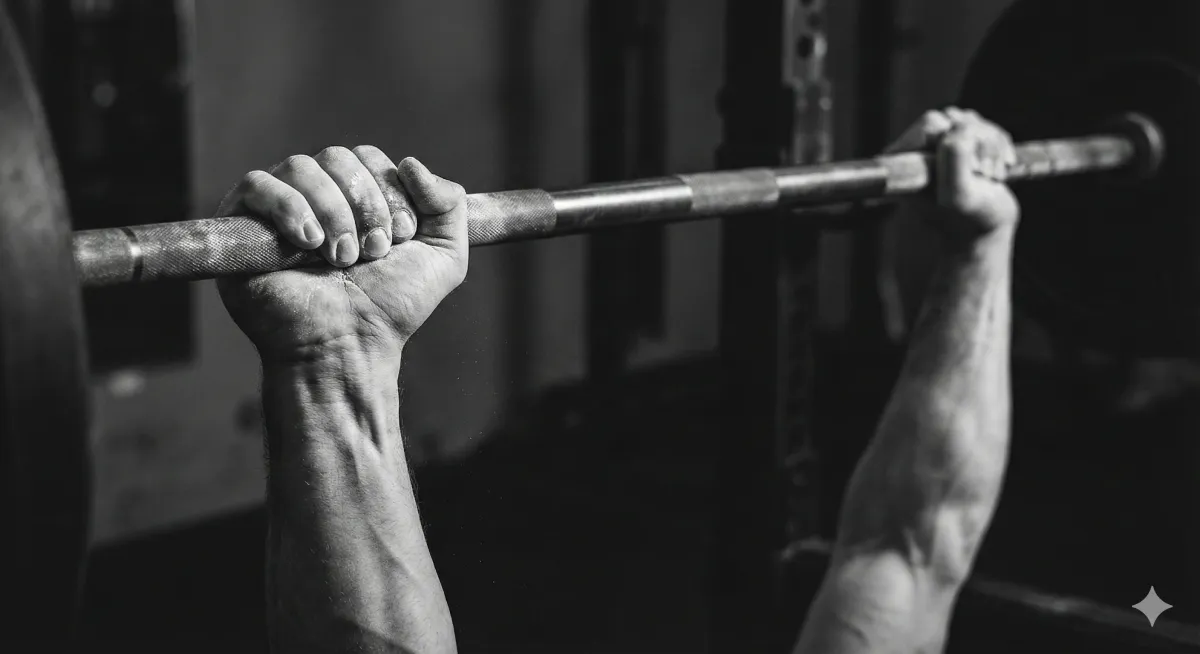
The Push Protocol: Engineering Anabolic Growth on an Empty Stomach
Article #2: The Push Protocol: Engineering Anabolic Growth on an Empty Stomach
By Connor with Honor
Medical Disclaimer: The following training program involves high-intensity resistance training performed in a fasted state. This places significant stress on the cardiovascular and central nervous systems. Consult with a medical professional before attempting this protocol, especially if you have a history of heart conditions, hypoglycemia, or dizziness. Stop immediately if you feel lightheaded.
Introduction: The Iron Doesn't Care
Gravity is the most honest thing in the universe. It does not care if you have not eaten for 20 hours. It does not care if you are tired. It only understands force.
When you walk into the gym in a fasted state, you are walking in with a physiological disadvantage (low glycogen) but a hormonal advantage (high HGH and adrenaline). Most people let the disadvantage win. They lift light. They "go through the motions" to conserve energy.
That is a mistake.
To build muscle while fasting—to actually grow while in a caloric deficit—you must convince your body that muscle mass is essential for survival. You cannot do this with light weights. You must subject your body to a stress so profound that it prioritizes muscle maintenance over everything else.
Welcome to the Push Protocol.
This is not a generic "chest day." This is a strategic assault on the pushing muscles of the upper body (Chest, Shoulders, Triceps), designed specifically for the fasted physiology. We are going to break down the science of why you must train to failure, the specific exercises that yield the highest return, and the mental warfare required to push heavy weight when your stomach is empty.
Part 1: The Physiology of the "Empty Tank" Lift
Before we touch a weight, we must understand the engine. When you lift fed (after a meal), you are running on glucose. It’s easy fuel. It burns dirty, but it burns fast.
When you lift fasted (16+ hours without food), the tank is different. Your liver glycogen is depleted. Your body is running on ketones and free fatty acids. But here is the secret weapon: Adrenaline and Sympathetic Drive.
Fasting increases catecholamines (adrenaline and noradrenaline). This is the "fight or flight" response. Your body thinks you haven't eaten because there is no food, so it sharpens your focus and increases your strength potential to help you "hunt."
The mTOR Pathway vs. AMPK
In simple terms, there are two metabolic switches:
AMPK (Catabolic/Fasted): This is the "cleaning" switch. It burns fat and recycles cells (autophagy).
mTOR (Anabolic/Fed): This is the "growth" switch. It builds muscle.
Usually, these oppose each other. However, heavy resistance training mechanically stimulates mTOR, even without food. By lifting heavy while fasted, you are sending a mechanical growth signal while keeping the hormonal fat-burning signal active. You are hacking the system to burn fat and build muscle simultaneously.
Part 2: The Warm-Up (The Primer)
When you are fasted, your inflammation is lower, but your joints can feel "dry." You cannot jump under a 300lb bar immediately. You must prime the central nervous system (CNS).
The Protocol:
5 Minutes of Steady State Cardio: Walk on an incline or use the rower. Just enough to break a sweat, not enough to burn energy.
Dynamic Stretching: Arm circles, band pull-aparts, and wall slides. Open up the thoracic spine.
The "Feeder" Sets: Before your first working set, do 2-3 sets with very light weight. Focus purely on the mind-muscle connection. Squeeze the muscle at the top. Wake it up.
Part 3: The Exercise Arsenal (Push)
We are using the 5 Sets to Failure methodology established in Article #1. Remember the goal: Mechanical Failure. This means you push until the bar physically will not move, despite your maximum effort.
1. The King: Incline Barbell (or Dumbbell) Press
Target: Upper Chest (Clavicular Head) & Front Delts
Why Incline? The upper chest is what gives the torso that thick, armored look. Flat bench is good, but incline is superior for aesthetic development and shoulder health.
The Setup: Set the bench to 30 degrees. Too steep hits only shoulders; too flat hits only lower pecs.
The Execution: Retract your scapula (pinch your shoulder blades together). Lower the bar to the top of your chest, just below the neck. Pause for 1 second. EXPLODE up.
The Fasted Mindset: On the way down, imagine you are loading a spring. On the way up, release the spring.
The Failure Point: On your last rep, the bar should stall halfway up. Fight it for 5 full seconds before racking it (or having a spotter help). That 5-second isometric struggle is where the growth happens.
2. The General: Standing Overhead Press (Military Press)
Target: Entire Shoulder Girdle & Core
This is the ultimate test of full-body tension. Because you are standing, your core must stabilize the load.
The Setup: Feet shoulder-width apart. Grip the bar just outside shoulders. Elbows slightly forward, not flared out.
The Execution: Take a deep breath into your belly and brace (do not breathe out yet). Drive the bar straight up, clearing your head. Lock out. Exhale.
The Fasted Mindset: Your core is your foundation. If your core is weak (because you are hungry/tired), the lift fails. Squeeze your glutes.
Safety Note: If you feel lower back pain, switch to Seated Dumbbell Press immediately.
3. The Finisher: Weighted Dips (or Close Grip Bench)
Target: Triceps & Lower Chest
The tricep makes up 2/3 of your arm mass. If you want big arms, stop curling and start pressing.
The Setup: Keep your chest slightly forward to engage pecs, or stay upright to isolate triceps.
The Execution: Lower until your shoulders are below your elbows (deep stretch). Press up to full lockout.
The Failure Point: When you can no longer press up, use your legs to assist yourself to the top, and then lower yourself slowly (negative reps). Do this until you cannot control the descent.
Part 4: The Psychology of the "Death Set"
This is where the Fasting Bot philosophy diverges from standard fitness advice.
Standard advice says: "Leave 1 or 2 reps in the tank." We say: "Empty the tank."
When you are fasting, you do not have the volume capacity to do 20 sets per body part. You might only have the energy for 5 quality sets. Therefore, every single one of those sets must be a "Death Set."
A Death Set is a set where you confront your own limitations.
Reps 1-5: You are strong. You feel good.
Reps 6-8: The burn starts. The lactate builds up. Your brain says, "Okay, that's enough."
Reps 9-10: The bar slows down. Your muscles are shaking. This is where the average person racks the weight.
The Growth Zone: This is where you keep going. You push. You grunt. You visualize the food you aren't eating fueling this fire. You get that 11th rep. You try for the 12th and fail halfway.
That failure is the victory.
Part 5: Troubleshooting the Fasted Push
Problem: Lightheadedness.
Solution: Sodium. When fasting, your body flushes water and sodium. Before your workout, take a pinch of high-quality sea salt or pink Himalayan salt with water. This increases blood volume and prevents the "head rush" when you stand up.
Problem: Weakness/Low Energy.
Solution: The "Psych Up." You are likely not physically weak; you are mentally checked out. Put on aggressive music. Watch a motivational video. Slap your chest. Wake up the nervous system.
Problem: Joint Pain.
Solution: You are dehydrated. Your joints need fluid. Drink 1 liter of water during the workout.
Conclusion: Earning Your Keep
When you finish this Push workout, you will be exhausted. Your muscles will be engorged with blood (the pump), even without carbs. You will feel a strange sense of clarity.
You have successfully hunted. You have expended energy. Now, and only now, does your body understand that it needs resources.
When you eventually break your fast (whether it's immediately after or hours later), your body will not store that food as fat. It will rush those nutrients to the chest and shoulders you just annihilated.
In the next article, we balance the equation. We will explore The Pull Protocol—how to build a back wide enough to carry the weight of the world, and why the "deadlift" is the ultimate act of fasting defiance.
Stay hungry. Stay heavy.