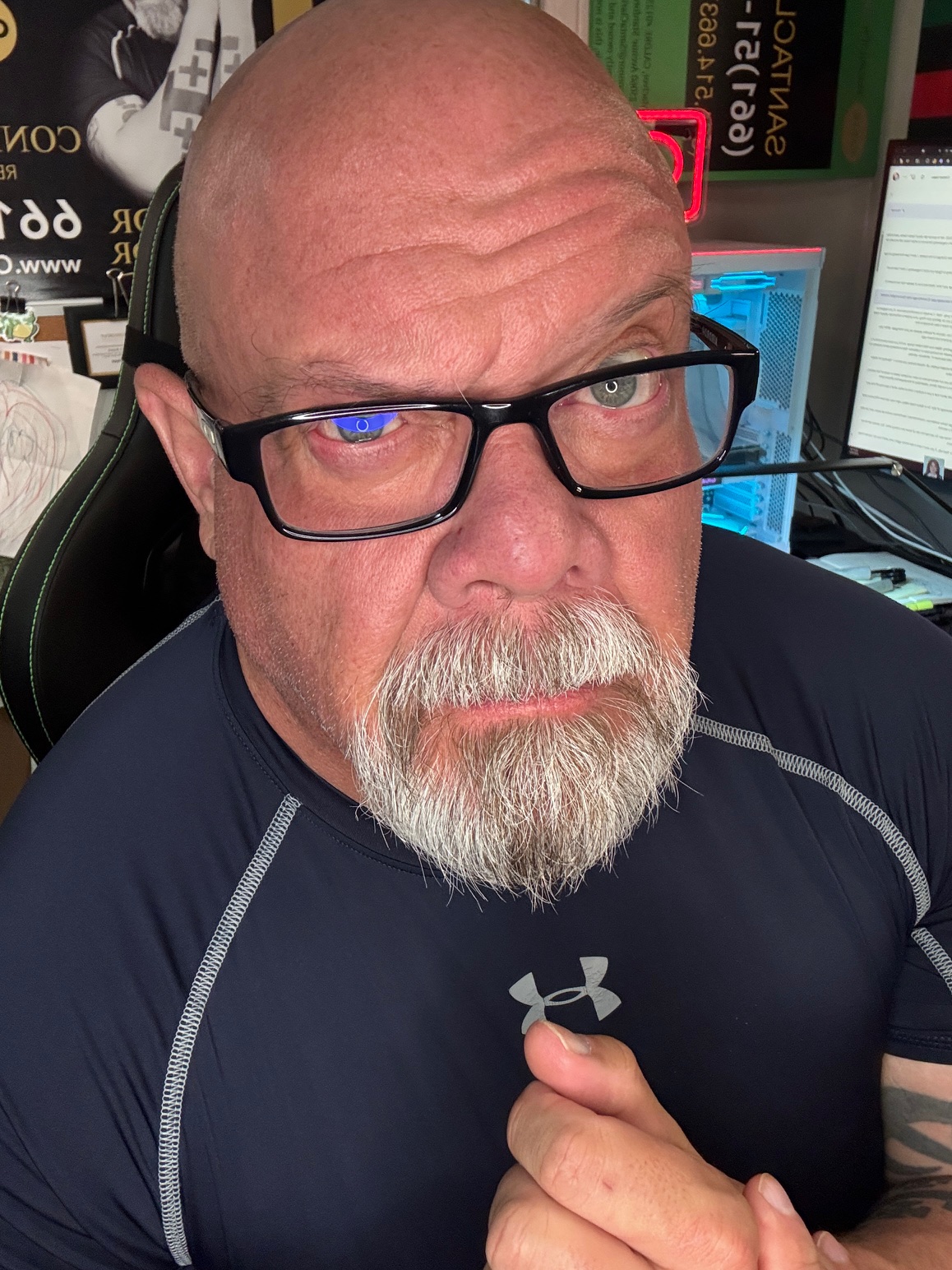
The War You Wage Against Yourself: A Raw Truth About Food, Fat, and the Fight for Your Life
By Connor MacIvor | Connor with Honor | AI Growth Architect
TL;DR
You're not fighting food. You're fighting yourself. Every bite you take past the point of necessity is a negotiation you're losing with the person in the mirror. I've lost 135 pounds. I've also quit alcohol, cigarettes, and chewing tobacco. I know addiction. I know the lies we tell ourselves. And I know the medicine industry will sell you a "solution" that steals your muscle while pretending to save your life. GLP-1 drugs? They should call them "GULP" drugs—because they gulp down your muscle mass while you celebrate a number on a scale. This isn't another feel-good weight loss story. This is the unfiltered truth about the war you're waging against yourself—and why you need to decide right now if you're going to win or let it kill you.
The Moment You Stop Lying
Let me tell you something nobody else will.
You know exactly what you're doing.
Every single time you reach for that extra serving, that late-night snack, that "reward" after a hard day—you know. You're not confused. You're not uninformed. You're not a victim of circumstance.
You're making a choice.
And that choice is killing you.
I'm not here to coddle you. I'm not here to give you permission to fail slowly. I'm Connor MacIvor—Connor with Honor—and I've spent twenty years as a cop, watching people destroy themselves in a thousand different ways. I've seen addiction wear every mask imaginable. And I'm telling you right now: food addiction is the most socially acceptable suicide method on the planet.
You can't avoid food like you can avoid a bar. You can't throw away all the food in your house like you can flush pills down the toilet. Three times a day, minimum, you sit down with your drug of choice and try to have a "healthy relationship" with it.
That's like asking an alcoholic to have three responsible drinks a day.
It doesn't work.
My War
I've been fat my entire life.
Not "carrying a few extra pounds." Not "a little husky." Fat. The kind of fat where you avoid mirrors. The kind where you suck in your gut for photos and then hate how you look anyway. The kind where you've tried every diet, bought every program, started every Monday with renewed determination—and finished every weekend with shame.
324 pounds. That's where I was.
And I'd been divorced after thirty years. No pension to fall back on. A small circle of people who actually give a damn about me. My fiancée Roxy—she stuck with me through all of it. But let me be clear: she shouldn't have had to.
I was the problem.
I've quit alcohol. That was poison, and I knew it, and I put it down. Seventeen years of cigarettes—gone. Eighteen years of chewing tobacco—done. When I commit to something, I don't mess around.
But food? Food is the demon that keeps coming back to the table.
You know why? Because unlike every other addiction, you can't just abstain. You have to face your demon every single day, multiple times a day, and somehow find the discipline to stop at "enough."
Most of us have no idea what "enough" even feels like anymore.
The 135-Pound Truth
I dropped 135 pounds.
Seven and a half months. Extended fasting. Hormone optimization—yes, testosterone, and I'm not ashamed to say it. When you're an older man and your hormones are in the gutter, getting them right isn't cheating. It's survival.
You want to know what it took?
Pain. Discipline. Deciding that my comfort was less important than my life.
I didn't find some magical shortcut. I didn't pop a pill and watch the weight melt off while my muscle disappeared. I made my body use its own fat for fuel because I refused to give it anything else to burn.
Extended fasting isn't comfortable. Anyone who tells you it is hasn't done it properly. You will be hungry. You will be irritable. You will fantasize about food. Your body will throw every chemical signal it has at you, trying to get you to eat.
And you will say no.
Not because it's easy. Because you've decided that the temporary discomfort of hunger is nothing compared to the permanent consequences of obesity.
The GLP-1 Lie
Let's talk about these "miracle" drugs everyone's celebrating.
Ozempic. Wegovy. Mounjaro. The GLP-1 agonists that Hollywood is injecting faster than Botox.
Here's what the commercials don't tell you: you're not just losing fat. You're losing muscle. Significant muscle. Studies are showing that up to 40% of the weight people lose on these drugs is lean body mass.
Forty percent.
Do you understand what that means?
Muscle is your metabolic engine. It's what burns calories at rest. It's what keeps you functional as you age. It's the difference between an independent 70-year-old and one who can't get out of a chair.
And these drugs are eating it alive.
They should call them GULP drugs. Because while you're celebrating your shrinking waistline, they're gulping down the very tissue that would have kept you healthy long-term.
You want to know what happens when you stop taking them? The weight comes back. But the muscle doesn't rebuild easily, especially if you're over 40. So now you're the same weight but with a worse body composition. More fat, less muscle, slower metabolism.
You're in a worse position than when you started.
But hey, at least you lost weight for a while, right? At least you got to post those progress photos before everything went sideways.
The pharmaceutical industry doesn't care if you're healthy. They care if you're subscribed. They want you dependent on a $1,000-a-month injection for the rest of your life. And they're gambling that you won't notice when your body composition quietly destroys itself underneath that smaller pants size.
I'm not interested in smaller pants. I'm interested in a functional body that will carry me through the next several decades of my life.
The Reward That's Killing You
Here's where we need to have a serious conversation.
You believe you deserve a reward.
After a hard day. After a stressful week. After dealing with difficult people. After hitting a small goal. After anything, really—because your brain has been conditioned to seek pleasure as compensation for discomfort.
"I deserve this."
How many times have you said that? How many times has that sentence preceded a decision you regretted? How many "deserved" treats have accumulated into the body you're trapped in right now?
Let me tell you what you actually deserve: you deserve to be healthy. You deserve to be strong. You deserve to look in the mirror without shame. You deserve to play with your kids or grandkids without getting winded. You deserve to be here, fully present, for the people who love you.
That cookie doesn't get you any of those things.
That "cheat meal" is not a reward. It's a punishment you haven't felt yet. Every time you "treat yourself" with food that's destroying your body, you're stealing from your future self. You're running up a debt that will come due—with interest.
And the interest rate on health debt is brutal.
The Voice in Your Head
We need to talk about the voice.
You know the one. It shows up around 9 PM when you're tired and your willpower is depleted. It whispers reasonable-sounding things.
"You've been good all day. One snack won't hurt."
"You're stressed. You need comfort."
"You can start fresh tomorrow."
"Life is short—enjoy it."
That voice is not your friend. That voice is the addiction talking. It's the same voice that told me to have "just one more drink." The same voice that convinced me I could quit chewing tobacco "anytime I wanted." The same voice that has kept millions of people fat, sick, and dying early while believing they're making reasonable choices.
That voice is a liar. And you need to stop negotiating with it.
Here's what I've learned: you don't debate the voice. You don't engage with its logic. You don't try to find compromises. You recognize it for what it is—your addiction trying to survive—and you override it with a decision you've already made.
The decision has to be made before the moment of temptation. You don't decide whether to eat the cake when the cake is in front of you. You decided hours ago, days ago, that you're not someone who eats cake anymore. The moment is just where you execute a choice you've already committed to.
This is how I quit alcohol. I didn't quit every day. I quit once, completely, and then I just kept executing that decision. The cravings came, and I acknowledged them, and I didn't drink anyway. Not because I won an argument with myself in the moment, but because the argument was already settled.
You have to settle the argument with food, or it will kill you.
The Point of No Return
Here's the part nobody wants to hear.
At some point, this becomes life or death.
Not metaphorically. Not eventually. Actually.
Type 2 diabetes. Heart disease. Stroke. Joint destruction. Sleep apnea that stops your breathing dozens of times a night. Fatty liver disease. The inflammation that accelerates every degenerative condition known to medicine.
These aren't possibilities. For someone significantly overweight, these are near-certainties given enough time.
And the window for fixing it gets smaller every year.
When you're 30 and overweight, your body has resilience. It can bounce back. The damage is there, but it's not permanent yet.
When you're 40, the margins get tighter. Things start to hurt. Recovery takes longer. The warnings get louder.
When you're 50, 60, 70—you're playing with borrowed time. Every year you don't address this is a year closer to the point where the damage becomes irreversible.
I'm not trying to scare you. I'm trying to wake you up.
Are you going to let it get there?
Because I've seen what "there" looks like. Twenty years as a cop, and I've seen the end result of decades of self-destruction. I've been in the rooms where doctors tell family members that there's nothing more they can do. I've watched people realize too late that all those "rewards" and "treats" cost them years with their grandchildren.
And I've watched people decide, at the last possible moment, that they wanted to live—only to discover that deciding wasn't enough anymore. The body they'd abused for decades didn't have enough left to give.
Don't be that person.
The Decision
I'm going to tell you something that sounds harsh but might save your life:
You do not deserve a cheat meal.
Not anymore.
Not until you've reached a place where your body can handle the occasional indulgence without sliding back into destruction. And if you've struggled with weight your whole life like I have, you may never be that person. You may be someone for whom "moderation" is just a slower path to the same destination.
That's okay. That's not a failure. That's self-knowledge.
I know alcoholics who haven't had a drink in thirty years. They don't sit around mourning the drinks they're "missing." They're grateful every day that they figured out the truth about themselves before it was too late.
You might need to think about food the same way.
Not deprivation. Not punishment. Just clarity about what you can and cannot handle.
Some people can have a slice of pizza and stop. Some people can keep ice cream in the freezer for weeks. Good for them.
If that's not you—and you know if it's not you—stop pretending it is.
I can't moderate certain foods. When I start, I don't stop. Not because I'm weak, but because my brain chemistry around those foods is different than someone else's. Fighting that reality is exhausting and pointless. Accepting it is freedom.
I don't eat those foods. Period. Not "sometimes." Not "in moderation." Not "on special occasions."
Never.
And you know what? It's easier that way. There's no negotiation. No willpower required in the moment. No mental energy spent deciding whether today is the day I can handle it. The decision was made, and now I just live it.
The War is Internal
Every external solution fails because the war isn't out there.
The problem isn't the availability of junk food. The problem isn't your spouse who keeps buying snacks. The problem isn't restaurant portions or food marketing or your genetics.
The problem is you.
You are the one who moves the food to your mouth. You are the one who decides to chew and swallow. You are the one who stands in front of the refrigerator at midnight, knowing you shouldn't, doing it anyway.
This isn't blame. This is power.
If the problem were external, you'd be helpless. If it were genetics or environment or bad luck, you'd have no control. But because the problem is you—your choices, your habits, your relationship with yourself—you have complete authority to change it.
No one can do this for you. No drug, no surgery, no program, no coach. They can help. They can provide tools. But in the end, you're the only one who can choose differently.
That's terrifying and liberating at the same time.
I've watched people spend thousands of dollars on weight loss solutions while refusing to do the only thing that actually works: change their behavior permanently. They want the result without the transformation. They want to be thin while still being the same person who made them fat.
It doesn't work that way.
You don't just need to lose weight. You need to become someone who doesn't need to lose weight. Someone whose default behaviors, automatic choices, and relationship with food produce a healthy body without constant effort.
That's a fundamental change in identity. And it starts with accepting that the old you—the one who got you here—needs to die.
What Actually Works
After everything I've tried, here's what I know works:
Fasting works. Extended fasting, intermittent fasting, whatever structure gets you to stop constantly feeding your body. When you're not eating, your body burns fat. It's that simple. Your insulin drops, your growth hormone rises, and your body accesses the energy it's been storing for exactly this purpose.
Hormone optimization works. If you're a man over 40 and you haven't had your testosterone checked, do it. If you're a woman dealing with menopause or hormone imbalances, address them. Trying to lose weight with broken hormones is like trying to drive with the parking brake on.
Cutting processed food works. The stuff that comes in packages with ingredient lists—that's not food. It's a delivery system for addictive chemicals designed in laboratories to make you eat more. Real food—meat, vegetables, eggs, fruit—doesn't hijack your brain the same way.
Lifting weights works. Not for burning calories during the workout, but for building the muscle that burns calories every hour of every day. More muscle means higher metabolism means easier maintenance for life.
Accountability works. Having someone who knows what you're doing and will call you out when you slip. For me, that's Roxy. For you, it might be a friend, a coach, or a community. Someone who won't let you lie to yourself.
Absolute rules work. Not "I'll try to eat less sugar" but "I don't eat sugar." Not "I'll limit my portions" but "I eat once a day." The more decisions you take off the table, the less willpower you need in the moment.
None of these are secrets. None of these are revolutionary. The information has been available for decades.
The problem isn't knowing what to do. The problem is doing it.
The Fight for Your Life
Let me tell you who's watching.
Your kids are watching how you treat yourself. Your spouse is watching whether you'll keep promises. Your friends are watching to see if change is really possible. Your doctors are watching your numbers get worse and hoping you'll figure it out before they have to give you bad news.
And you? You're watching yourself. Every day. Knowing the truth you pretend not to know.
This isn't about vanity. This isn't about fitting into old clothes or looking good at a reunion. This is about being alive. Functioning. Present.
When I was at my heaviest, I was disappearing. Not physically—I was very visible at 324 pounds. But I was disappearing from my own life. I was tired all the time. My joints hurt. I avoided activities. I made excuses. I was there but not there.
Losing 135 pounds didn't just change my body. It changed what I was capable of. The energy I have now. The confidence. The willingness to do things I would have avoided before.
That's what you're fighting for. Not a number on a scale. A life.
The Question
So here's where I leave you.
You've read all of this. You've nodded along with some of it, maybe gotten defensive about other parts. You've probably already thought about what you're going to eat later and how it does or doesn't fit with what I've written.
And you have a choice to make.
Not someday. Not Monday. Not after the holidays or your birthday or that wedding coming up.
Now.
Are you going to keep doing what you've been doing? Keep having the same cycle of motivation and failure, commitment and relapse, hope and despair?
Or are you going to decide—really decide, in a way that changes everything—that you're done losing this war?
I can't make that decision for you. No one can. The voice in your head is going to tell you there's plenty of time, that one more day won't matter, that you'll figure it out eventually.
That voice is wrong.
Every day you delay is a day of damage. Every "last supper" mentality reinforces the pattern you're trying to break. Every promise to "start tomorrow" is a lie you're telling yourself.
I know because I told myself those lies for decades.
The day I stopped lying was the day everything changed. Not because the cravings stopped—they didn't. Not because it got easy—it wasn't. But because I finally told myself the truth:
No one is coming to save you. There is no magic solution. The only way out is through, and through requires becoming someone who doesn't need these crutches anymore.
A Final Word
I'm Connor MacIvor. Connor with Honor.
I spent twenty years in law enforcement, and now I spend my days helping businesses grow through AI and automation. I know about systems—the kind that work and the kind that don't. And I'm telling you that the system most people use for managing their weight is fundamentally broken.
It's built on moderation for people who can't moderate. It's built on willpower when willpower is a depleting resource. It's built on treating symptoms while ignoring the underlying disease.
The disease is your relationship with yourself. The cure is transformation, not treatment.
I don't have a program to sell you. I don't have a pill or a powder or a meal plan. What I have is the truth, as I've lived it:
You can change. Completely. Permanently.
But you have to want it more than you want comfort. More than you want the taste of your favorite food. More than you want the temporary relief of numbing yourself with calories.
You have to want to live.
The war you're fighting is inside yourself. Every battle happens in your own mind. And the enemy knows all your weaknesses because the enemy is you.
Stop negotiating with yourself. Stop giving yourself permission to fail. Stop believing that your history determines your future.
You can be someone different tomorrow than you are today. But only if you choose.
Make the choice.
Then make it again tomorrow.
And the day after.
Until it's not a choice anymore—it's just who you are.
That's how wars get won. One day at a time, with zero tolerance for surrender.
You've got this.
But only if you decide you do.
Connor MacIvor is the AI Growth Architect and founder of HonorElevate, helping businesses leverage AI automation to grow and scale. With 25+ years in Santa Clarita real estate and 20+ years in law enforcement, Connor brings a unique perspective on discipline, systems, and transformation. Follow his journey at @AIwithHonor.
The Mental Game Nobody Talks About
You want to know what nobody prepares you for?
The loneliness of this battle.
When you're fat, you have company. Most of America is right there with you. You can commiserate about diets, laugh about "getting back on track Monday," share recipes for foods you shouldn't be eating. There's a whole culture built around collective failure.
When you start actually changing? That community disappears.
The friends who used to split dessert with you suddenly feel judged—even if you haven't said a word. The family members who enabled your eating get uncomfortable when you decline what they're offering. The coworkers who thought you were "fun" because you'd always grab fast food together start thinking you've gotten "weird" or "obsessed."
You're breaking an unspoken agreement. The agreement that says we'll all be unhealthy together so nobody has to feel bad about it.
I lost friends to my transformation. Not officially—they didn't announce it. They just stopped calling. Stopped inviting. Let the relationship fade. Because my existence became an inconvenient reminder of what's possible if you actually commit.
This is the price of change. And you need to decide if you're willing to pay it.
Because here's the thing: the people who matter will support you. Roxy never once tried to sabotage my progress. She adapted. She found ways to enjoy food and life that didn't require me to compromise my health. That's what real support looks like.
The people who pressure you to eat, who mock your discipline, who call you "no fun" because you won't participate in their self-destruction? They're not friends. They're crabs in a bucket, trying to pull you back down because your success threatens their excuses.
Let them go.
The loneliness is temporary. The health is forever.
What I Wish Someone Had Told Me at 200 Pounds
If I could go back and talk to my younger self—the one who was "only" 200 pounds and thought he had plenty of time to figure this out—here's what I'd say:
It's easier now. Every pound you add makes the next pound harder to lose. The habits get more entrenched. The hormones get more disrupted. The joints take more damage. Fix this now, while your body still has resilience.
The "just this once" compound. One cheat meal doesn't add much to the scale. But it does reset your cravings, your blood sugar, your psychological momentum. It makes the next cheat easier to justify. And the next. Until "just this once" becomes "just this week" becomes "I'll start over next month."
Nobody is coming to save you. Not a doctor with a magic prescription. Not a trainer with a secret workout. Not a supplement company with a miracle pill. Every single person you're hoping will have the answer is going to tell you some version of "eat less, move more." Because that's the truth. Stop waiting for someone else to fix what only you can fix.
The pain you're avoiding is nothing compared to what's coming. You think hunger is painful? Try diabetes. You think giving up your favorite foods is hard? Try giving up your mobility. You think discipline is uncomfortable? Try explaining to your grandchildren why you won't be around for their graduations.
Your relationship with food is a relationship with yourself. The reason you eat isn't really about food. It's about what you're trying to feel—or not feel. Until you address the underlying need you're meeting with food, you'll keep returning to it. Get honest about what's really driving you.
Momentum is everything. The first week is the hardest. The first month is hard. After that? It gets easier. Your taste buds change. Your cravings diminish. Your identity shifts. But you have to push through the hard part to get to the easy part. Most people quit right before the breakthrough.
You can handle more than you think. Fasting for 24 hours won't kill you. Neither will 48. Or 72. Your body has reserves you've never tapped. The discomfort you're so afraid of is manageable—it's just unfamiliar. Get familiar with it.
If someone had grabbed 200-pound me by the shoulders and screamed this into my face, I might have listened. Probably not—I wasn't ready yet. But maybe. And maybe one person reading this right now is ready to hear what I wasn't.
The Identity Shift
Here's the breakthrough that changed everything for me:
I stopped trying to lose weight as a fat person, and started living as a healthy person who happened to have extra weight to shed.
The difference is everything.
A fat person trying to lose weight is constantly fighting against themselves. They're swimming upstream, battling their identity, using willpower to override who they "really" are. Every healthy choice is a struggle because it contradicts their self-image.
A healthy person who happens to be overweight is just executing their nature. Eating well isn't discipline—it's preference. Fasting isn't punishment—it's routine. Moving their body isn't exercise—it's just what they do.
This isn't positive thinking or fake-it-till-you-make-it nonsense. It's a genuine psychological reorientation.
When someone offers me cake, I don't think "I can't have that because I'm on a diet." I think "That's not something I eat." Not willpower. Identity.
When I feel hungry, I don't think "I have to suffer through this." I think "Good, my body is accessing stored energy." Not deprivation. Process.
When I see someone ordering what I used to eat, I don't feel jealous. I feel grateful that I'm not them anymore. Not longing. Relief.
This shift didn't happen overnight. It took months of consistent behavior before my brain accepted the new programming. But once it clicked, everything got easier. I wasn't fighting myself anymore. I was just being myself—the new self I had intentionally constructed.
You can do the same thing. But it requires acting in accordance with your desired identity even when it doesn't feel natural. Especially when it doesn't feel natural. Because that repetition is what rewrites the story you tell yourself about who you are.
The Support Structure That Actually Works
Let me be specific about what kind of support helps versus what kind hurts.
What helps:
Someone who will ask you hard questions without judgment. "Did you eat what you planned to eat today?" Not accusatory—just honest.
Someone who will participate in your journey without making it about them. Roxy adjusts our meals to support my approach without complaining that I've made her life harder.
Someone who celebrates your wins without qualifying them. Not "Great, but you still have a long way to go." Just "Great."
Someone who will call you out when you're lying to yourself. Because you will lie to yourself. You need someone who knows you well enough to spot it.
What hurts:
People who "help" by constantly offering you food or talking about food or arranging social events around food.
People who minimize your progress. "You've lost how much? You don't even look different."
People who catastrophize your approach. "Fasting? That's dangerous! You're going to destroy your metabolism!"
People who take your success personally. "Must be nice to have that kind of willpower. Some of us have real problems."
Be ruthless about this. Audit your relationships. Who actually supports you, and who just likes you better when you're failing? Who adds energy to your journey, and who drains it?
This isn't about cutting people off harshly. It's about being honest about the impact of your relationships and making decisions accordingly. Spend more time with the people who help. Spend less time with the people who hurt.
Your environment shapes your behavior more than you realize. If you're constantly surrounded by people who eat poorly and think poorly about health, you will absorb that. If you surround yourself with people who prioritize their bodies and make intentional choices, you will absorb that instead.
Choose your influences.
The Non-Negotiables
After all my failures and all my successes, I've developed a list of non-negotiables. These are the things I don't compromise on, regardless of circumstances. No exceptions. No "just this once."
I don't eat processed sugar. Not a little. Not on special occasions. Not when someone made it especially for me. Sugar is addictive, metabolically destructive, and offers zero benefit. I don't eat it.
I don't eat after dark. Once the sun sets, my eating window is closed. This prevents the late-night snacking that was my biggest downfall for decades.
I move my body every day. Not necessarily a workout—but something. A walk. Some stretches. Yard work. Something that reminds my body it's meant to move.
I drink water, black coffee, and not much else. No liquid calories. No diet sodas that keep sugar cravings alive. Nothing that triggers hunger or disrupts the fasting state.
I weigh myself daily. Not to obsess over the number, but to maintain awareness. I can't manage what I don't measure. The scale tells me the truth even when my brain is trying to lie.
I don't negotiate in the moment. When the craving hits, the decision is already made. The time for deciding was yesterday. The moment is just execution.
These might not be your non-negotiables. You might need different boundaries based on your particular challenges. But you need some. Specific, concrete, inviolable rules that you don't break regardless of what your brain tells you in the moment.
Because in the moment, your brain will lie. It will rationalize. It will minimize. It will convince you that this one time doesn't matter.
It matters. They all matter. And having pre-made decisions is the only way to win against a brain that's actively trying to sabotage you.
The Long Road Home
I'm not done.
Let me be clear about that. I've lost 135 pounds, but the journey isn't over. There's more weight to lose. More muscle to build. More habits to solidify. The 324-pound version of me is gone, but the work continues.
And honestly? It always will.
This isn't a destination. It's not a finish line you cross and then you're done. It's a way of living that either continues or doesn't.
The day I decide I've "arrived" is the day I start sliding backward. The day I relax my standards because I've "earned it" is the day the weight starts creeping back. The day I stop treating this as a daily practice is the day I become another sad statistic of someone who lost a bunch of weight and then gained it all back.
I refuse to be that person.
So I wake up every day and recommit. Not dramatically—just quietly, to myself. Today I will execute the identity I've built. Today I will not negotiate with the voice that wants me dead. Today I will choose my future over my comfort.
Every. Single. Day.
That's the long road home. Not to some fantasy version of yourself with perfect abs and no struggles. But to a sustainable way of living that produces health as a byproduct rather than demanding it as a constant sacrifice.
The goal isn't to hate the process less. The goal is to become someone who doesn't experience it as suffering.
And that's possible. I'm proof. But it requires walking the road long enough that it stops feeling like a road and starts feeling like just... life.
Frequently Asked Questions
Q: Isn't fasting dangerous? My doctor says I need to eat regular meals.
A: Humans evolved fasting. We didn't have 24/7 access to food for the first 200,000 years of our existence. Your body is designed to go without food—that's why you store fat in the first place. That said, if you have medical conditions, work with a doctor who understands fasting (many don't because they weren't trained in it). But "dangerous" is relative. You know what's actually dangerous? Being 100 pounds overweight for decades.
Q: What about metabolism? Won't fasting slow it down?
A: The "starvation mode" myth won't die, will it? Short-term fasting actually increases metabolic rate slightly due to adrenaline release. Your body is trying to help you find food. Extended fasting may eventually reduce metabolism, but not as much as people fear—and it recovers when you eat. You know what really destroys metabolism? Losing muscle on GLP-1 drugs while thinking you're getting healthier.
Q: You mention testosterone. Isn't that just for bodybuilders?
A: Testosterone isn't a performance-enhancing drug when you're using it to reach normal levels. It's a hormone your body should be producing but often doesn't as you age. Low testosterone makes losing weight harder, recovery harder, and life harder. Getting it optimized isn't cheating—it's maintenance. Get your levels checked. If they're low, talk to a competent doctor about replacement.
Q: What do you actually eat when you do eat?
A: Meat. Eggs. Vegetables. Full-fat dairy if you tolerate it. Minimal processed anything. I don't count calories—I eat real food until I'm satisfied, and because real food is satiating, I don't overeat. The overeating happens when you're eating engineered food designed to bypass your satiety signals.
Q: How do you handle social situations?
A: I'm honest. "I'm fasting today." "I don't eat that." People respect it more than you think. And the ones who pressure you to eat aren't looking out for your health—they're looking for permission to eat badly themselves. Don't be their excuse.
Q: What if I fail?
A: You will fail. I've failed more times than I can count. The difference is whether failure becomes an excuse to quit or a data point for improvement. When I slip, I don't spiral for a week. I acknowledge it, figure out what triggered it, and get back on track immediately. Not tomorrow. Now.
Q: Is this really sustainable long-term?
A: Ask yourself: is what you're doing now sustainable? Because the trajectory you're on has a very clear endpoint, and it's not health. The question isn't whether change is hard—it's whether the alternative is acceptable. For me, it's not. So yeah, I'll do hard things indefinitely. Because the alternative is worse.
Summary
The battle against obesity is a battle against yourself. Every excuse, every justification, every "I deserve this" is your own mind working against your survival. External solutions—including the much-hyped GLP-1 drugs—fail because they treat symptoms while ignoring the fundamental problem: your relationship with yourself and food. True transformation requires accepting that moderation may not be an option for you, that comfort is the enemy of change, and that the decision to be different must be made once and then executed daily without negotiation. This isn't about dieting—it's about becoming someone who doesn't need to diet. Someone whose default behaviors produce health rather than disease. You can be that person. But only if you choose to stop lying to yourself and start the real war—the one fought in your own mind, every meal, every day, until victory becomes habit. The fight for your life isn't metaphorical. It's real, it's happening now, and only you can win it.
Keywords: weight loss motivation, food addiction recovery, extended fasting results, GLP-1 drug dangers, Ozempic muscle loss, transformation mindset, obesity battle, Connor MacIvor, Connor with Honor, AI Growth Architect, Santa Clarita, discipline weight loss, hormone optimization weight loss, quit food addiction
Related Articles on HonorElevate:
AI Over 50: Technology Transformation for Professionals Born Before 1975
Building Systems That Scale: Business Automation Fundamentals
The First Responder Advantage: How Law Enforcement Training Applies to Business
Santa Clarita Local Business Growth: AI Solutions for the SCV
© 2024 HonorElevate | Connor MacIvor | All Rights Reserved
Follow SCVLeads: Facebook | Instagram | TikTok | YouTube | LinkedIn