70+ hours and still going strong with fasting besides some self doubt
My Personal Journey Through Water Fasting: Dropping Body Fat, Building Discipline, and Rediscovering What Works

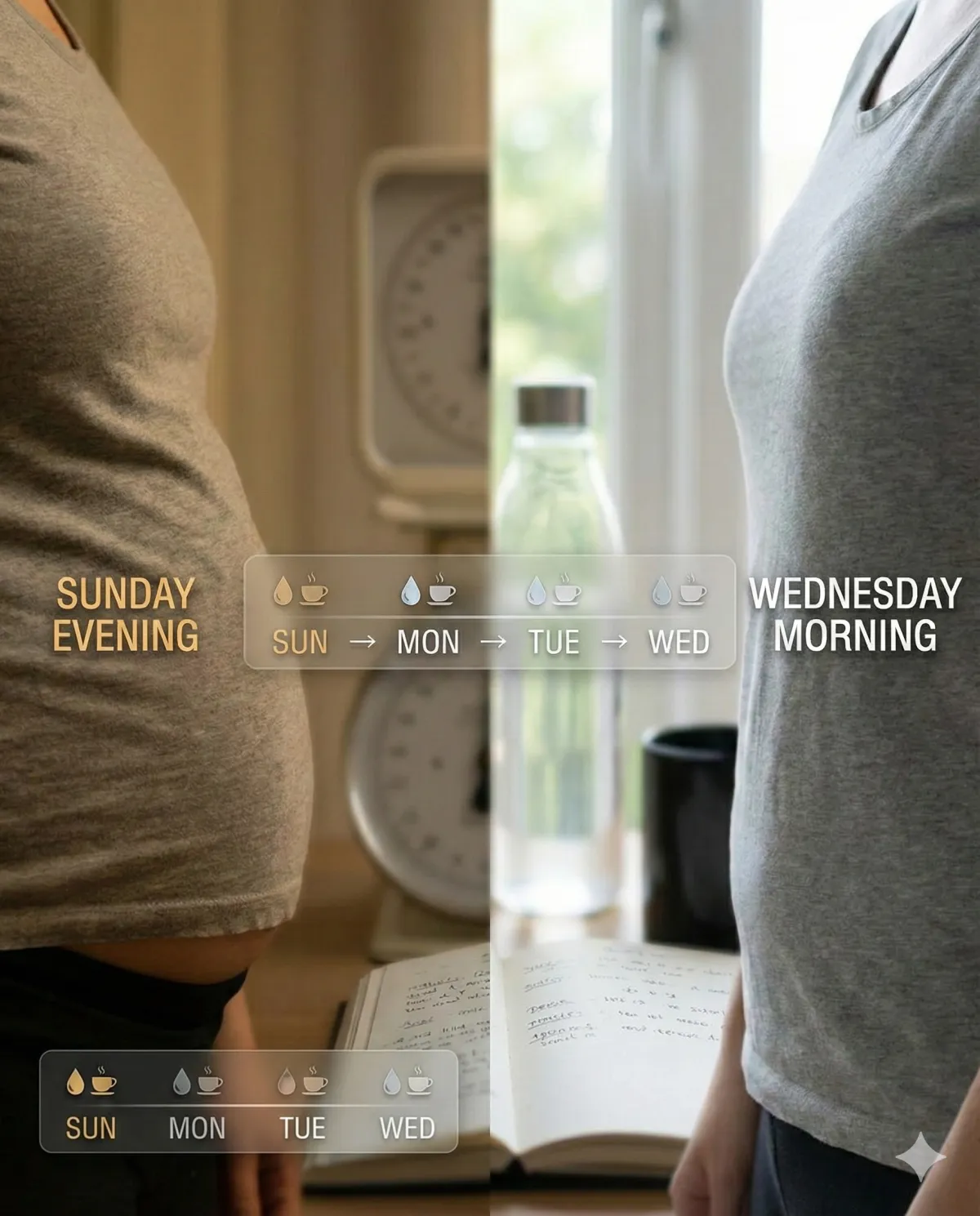
The scale doesn't lie, but it also doesn't tell the whole story. As I stand here on Wednesday morning, comparing photos from Sunday evening when I started this current fast to where I am now, I can see visible changes already. My fat fingers keep getting in the way of the camera as I try to document this journey, but the difference is undeniable. This isn't my first rodeo with extended fasting—far from it. But every time I embark on one of these journeys, I'm reminded that it's never easy, no matter how many times you've done it before.
Let me take you through my personal experience with water fasting, the mental and physical challenges that come with it, the science behind why it works, and the honest truth about what happens when a self-admitted food addict tries to regain control through one of the most challenging but effective fat loss methods available.
The Starting Point: Sunday Evening and the Decision to Fast
Sunday evening around 8 PM, I put the fork away. There was nothing particularly special about the meal I had—no elaborate "last supper" preparation, no strategic carb loading or special macro considerations. It was just a regular meal followed by a decision: it was time to stop climbing and start descending again.
The mental preparation is always interesting when you've been through this process before. There's this internal dialogue that happens—worrying about whether you'll break the fast prematurely, wondering if this time will be different from the last time, questioning your own willpower and commitment. When you've let yourself down in the past by sabotaging your own efforts, that history creates doubt. And I get that completely because I've been there multiple times.
I've been climbing—gaining weight, putting on mass, and if I'm being completely honest with myself, using the bodybuilder term "bulking" when what I'm really doing is feeding a food addiction. Bodybuilders bulk strategically. Food addicts like me just keep going. There's a difference, and acknowledging that difference is part of the honesty required to make real change.

The goal this time is to get back to somewhere in the range of 265 to 280 pounds. The exact number will depend on how much muscle mass I've actually put on during this last "feasting bulk cycle" versus how much is simply excess body fat that needs to come off. My biggest fat loss achievement was going from 365 pounds down to 240 pounds, and that was accomplished through a lot of fasting—multiple cycles of extended fasts followed by strategic refeeding periods, repeated over and over until I reached that goal.
This time feels different. Rather than doing shorter fasts with frequent refeeds, I'm looking at this as more of a reset—a longer-term water fast where I let my body tap into its fat reserves and experience the metabolic and hormonal benefits that come from extended periods without food.
The Method: Black Coffee and Water, Nothing Else
The protocol I'm following is straightforward: black coffee and water, nothing else. No bone broth, no electrolyte drinks with calories, no "fat fasting" with coconut oil or butter. Just pure water fasting with black coffee to help with energy and mental clarity.
There's something to be said for the simplicity of this approach. No tracking macros, no meal planning, no decisions about what to eat or when to eat it. The fork is put away, and that's that. For someone who struggles with food addiction, removing the decision-making around food entirely can actually be liberating, even though the physical and mental challenges are significant.

I'm documenting this journey on my blog at fastingbot.com, posting updates with photos showing the changes as they happen. Accountability matters, especially when you're battling your own history of self-sabotage. When you make your journey public, when you commit to showing up and reporting your progress (or lack thereof), it adds another layer of motivation to push through the difficult moments.
The Timeline Challenge: Not Setting an End Date
Here's where my approach might differ from what many fasting protocols recommend: I'm not prescribing a specific end date. I'm not saying "I'm doing a 7-day fast" or "I'm going for 14 days" or any other predetermined timeline. The reason for this is rooted in my history of letting myself down.
When you've screwed up your own commitments so many times in the past, when you've told yourself "I'm fasting for X days" and then broken that commitment on day three or day five, it becomes hard to establish a baseline or end date with any confidence. You start doubting whether you can trust yourself to follow through, and that doubt can become a self-fulfilling prophecy.
So instead, I'm taking it day by day. I know I want to do a minimum of several days—probably at least five to seven to get into the deeper metabolic benefits of extended fasting. But beyond that, I'm listening to my body and my mind, assessing whether I have the wherewithal and willpower to continue or whether it's time to refeed strategically and start another cycle.
Some people might argue this approach lacks discipline or structure. But I'd counter that it requires a different kind of discipline—the discipline of honest self-assessment rather than rigid adherence to a number that might not serve you well. It's the difference between failing because you set an unrealistic goal versus succeeding by meeting yourself where you actually are.
The critical question becomes: do you have the willpower to hold out, or not? And that's something only you can answer in the moment, based on how you're actually feeling rather than what you thought you'd feel when you planned the fast days or weeks earlier.
Days One and Two: The Transition Period
Sunday evening to Monday—that first full day—is always a transition. Your body is still running primarily on glucose from your last meal. You might feel some hunger pangs as your stomach expects food at its usual times, but it's generally manageable. The real challenge hasn't hit yet.
Monday to Tuesday is where things start to shift. Your body is depleting its glycogen stores and beginning the transition to using fat for fuel. This transition period can be uncomfortable. You might feel tired, a bit foggy, maybe irritable. Your body is essentially switching fuel sources, and that metabolic shift takes some adjustment.
By Tuesday afternoon, I was definitely feeling it. This is typically the hardest part of an extended fast for me—days two and three when your body is in that transition zone between glucose metabolism and full fat adaptation. You're not yet experiencing the mental clarity and energy that comes with deeper ketosis, but you're past the easy part where you're still riding on stored glycogen.
Tuesday afternoon was very difficult. I won't sugarcoat that. There were moments where I questioned whether I wanted to continue, where the idea of breaking the fast and having a meal seemed incredibly appealing. This is where the mental game becomes everything. This is where your reasons for fasting need to be strong enough to overcome the discomfort of the moment.
Day Three and Beyond: When Things Start to Shift
By Wednesday—which is where I am as I record this update—something starts to change. You would think that after multiple days of not eating, you'd feel increasingly worse. You'd expect to be "in the crapper," as I put it, feeling weak and depleted and barely able to function. But that's not what happens when you're doing an extended water fast with adequate body fat to fuel the process.
Instead, several remarkable things start to occur. Your eyesight gets sharper—colors seem more vivid, your ability to focus on objects at various distances improves. Your brain gets sharper—that initial fog lifts and is replaced by a clarity and mental acuity that can actually exceed your normal fed state. You start experiencing increased energy rather than decreased energy, which seems counterintuitive but is well-documented among experienced fasters.
This shift happens because your body has fully transitioned into fat-burning mode. You're producing ketones from the breakdown of body fat, and those ketones serve as an incredibly efficient fuel source for your brain and body. The adaptation period is over, and you're now reaping the benefits of the fasted state.
The Science Behind Extended Fasting: Why It Works
Let me address some of the common concerns and misconceptions about extended fasting, particularly around muscle loss and metabolism, because these are the objections I hear most frequently when I tell people what I'm doing.
"You're Going to Lose All Your Muscle"
This is probably the most common concern, and it's based on a misunderstanding of how the body responds to fasting. Yes, if you're in a caloric deficit through regular eating (eating small amounts daily), your body will break down some muscle tissue for fuel. But extended fasting triggers a completely different metabolic response.
When you're fasting for multiple days and you have adequate body fat stores, your fat becomes a fantastic fuel resource. Your body is incredibly intelligent—it doesn't want to waste precious muscle tissue when it has abundant fat stores available. Evolution has programmed us to preserve muscle during periods without food because muscle is what allows us to hunt, gather, and survive.
More importantly, extended fasting triggers a massive growth hormone release. After you've been fasting for several days, your body starts producing significantly elevated levels of growth hormone—some studies show increases of 300% or more. This growth hormone surge serves a specific purpose: it helps preserve muscle mass during the fast.
The growth hormone tells your body: "We're in a fasted state, we need to maintain our functional tissue (muscle) and use our storage tissue (fat) for fuel." This is why I continue working out during extended fasts. I don't stop training just because I'm not eating. The combination of the fasting state, elevated growth hormone, and continued training stimulus actually creates an environment where muscle preservation is quite good, especially if you have adequate body fat to fuel the process.
"Your Metabolism Will Crash"
This is another common misconception based on studies of chronic caloric restriction, not extended fasting. When you eat small amounts daily over extended periods, your body adapts by lowering metabolic rate to match the reduced intake—this is the metabolic adaptation that makes traditional dieting so difficult.
But extended water fasting triggers a different response. Your metabolism actually goes up, not down. This seems counterintuitive, but it makes perfect evolutionary sense. When our ancestors went without food for several days, they needed more energy and mental sharpness to hunt and find food, not less. A slowed metabolism would have been a death sentence.
Studies on extended fasting show that resting metabolic rate can actually increase by 3-14% during the first several days of a fast. This is partly due to the increase in norepinephrine (a stimulating neurotransmitter) and partly due to the metabolic efficiency of using fat for fuel. You're not slowing down—you're ramping up.
The Autophagy Factor
One of the most profound benefits of extended fasting is autophagy—the process by which your body breaks down and recycles old, damaged cellular components. This is like an internal spring cleaning where your body identifies dysfunctional proteins, damaged organelles, and cellular debris and breaks them down for energy or raw materials.
Autophagy has been linked to numerous health benefits including improved cellular function, reduced inflammation, enhanced immune function, and potentially increased longevity. While autophagy occurs to some degree during any fasted state, extended fasting of 24-72 hours and beyond seems to dramatically upregulate this process.
For someone like me who's been through cycles of weight gain and loss, who has stretched skin and potentially some metabolic dysfunction from years of being significantly overweight, autophagy represents a chance for cellular renewal and repair that you simply can't achieve through regular eating patterns.
The Mental Challenge: Battling Food Addiction and Self-Sabotage
Let me be brutally honest about something: I'm a food addict. I can dress it up with bodybuilding terminology and talk about "bulk cycles," but the reality is that I have an unhealthy relationship with food that goes beyond normal appetite and satiety signals.
Food addiction is real, and it operates on many of the same neurological pathways as drug addiction. Certain foods—particularly those high in sugar, fat, and salt—trigger dopamine releases in the brain that create pleasure and reward associations. Over time, you need more of those foods to achieve the same level of satisfaction, and you experience discomfort when you don't have access to them.
For a food addict, the constant presence of food in modern society is both a blessing and a curse. Food is everywhere, it's socially acceptable to eat frequently, and there's an entire industry designed to make food as hyperpalatable and addictive as possible. Trying to maintain a healthy relationship with food in this environment is like asking an alcoholic to practice moderation while living in a bar.
This is why extended fasting can be such a powerful tool for someone like me. It removes food from the equation entirely. I'm not trying to practice moderation or portion control or eating only certain foods at certain times—I'm just not eating at all. The decision is binary: fork down, nothing crosses my lips except water and black coffee.
But the mental challenge is significant. Days of programming telling me that I need to eat, that not eating is dangerous, that I'll feel better if I just have a small meal—all of that conditioning is still there. The voice in my head that wants to sabotage my progress by convincing me that "one meal won't hurt" or "you've already lost some weight, you can take a break now"—that voice is always there.
This is where the history of self-sabotage makes things harder. When you've given in to that voice before, when you've broken fasts prematurely and disappointed yourself, it creates a pattern of doubt. Each time you start a new fast, part of you is wondering whether this will be another time you let yourself down.
Breaking that pattern requires building new evidence. Every day I push through, every moment where I feel the urge to eat but choose not to, I'm creating new data points that prove I can do this. I'm building trust with myself that when I commit to something, I'll follow through. That trust has to be earned through action, not just intention.
The Physical Experience: What Fasting Actually Feels Like
Let me walk you through what this process actually feels like in the body, because I think a lot of people have misconceptions based on the idea that fasting must be miserable from start to finish.
Hunger Comes and Goes
One of the most surprising things about extended fasting is that hunger is not constant. You'd think that the longer you go without food, the hungrier you'd get, building to some unbearable crescendo. But that's not what happens.
Hunger comes in waves. You might feel intensely hungry for 20-30 minutes, and then it passes. A few hours later, it comes back, and then it passes again. By day three or four, many people find that hunger largely disappears. Your body has adapted to using fat for fuel, and the hormonal signals that trigger hunger (primarily ghrelin) start to diminish.
The hunger you do experience is often more psychological than physical. It's not that your body needs food—you have plenty of stored energy. It's that your brain is conditioned to expect food at certain times, or you encounter triggers (food commercials, the smell of cooking, social situations involving eating) that make you think about food even though you're not physically hungry.
Energy Levels Fluctuate
The first couple days, energy can be lower than normal, especially during that transition period I mentioned earlier. You might feel like you need more rest, like workouts are harder, like you just don't have your usual pep.
But once you're fat-adapted and producing ketones efficiently, energy often surges. Many people report feeling more energetic while fasting than they do while eating regularly. Workouts feel good, mental tasks feel easier, and you don't experience the energy crashes that often come after meals when your body is digesting and blood sugar is fluctuating.
I continue my regular workout routine during fasts. I lift weights, I do cardiovascular work, I stay active. Some people prefer to reduce workout intensity during extended fasts, but I find that maintaining my training helps with muscle preservation and actually makes me feel better overall.
Sleep Can Change
Some people sleep better while fasting—they fall asleep more easily and sleep more deeply. Others find that sleep is disrupted, particularly in the first few days. I tend to need slightly less sleep while fasting, and I wake up feeling more alert and refreshed than I do during eating periods.
This variation in sleep patterns is normal and seems to be individual. The key is to listen to your body. If you need more rest, take it. If you're feeling energetic and need less sleep, that's fine too.
Physical Sensations
You might experience cold hands and feet as your body adjusts its circulation patterns. You might notice changes in your breath (ketone breath, which has a slightly fruity or acetone smell). Your tongue might develop a coating. These are all normal signs of the metabolic changes happening in your body.
Some people experience headaches in the first few days, often related to electrolyte shifts as your body releases water weight. This is why some fasting protocols recommend supplementing with sodium, potassium, and magnesium. I keep it simple with just water and black coffee, but if symptoms become uncomfortable, adding electrolytes can help.
The Mental Clarity Phenomenon
This is one of the most remarkable aspects of extended fasting: the mental clarity and sharpness that develops. Your eyesight literally seems to improve—colors are more vivid, your ability to focus is enhanced. Your thinking becomes clearer, more focused, more creative.
This isn't just subjective experience—there's science behind it. Ketones are an incredibly efficient brain fuel, and many people report enhanced cognitive function while in ketosis. Additionally, fasting increases production of brain-derived neurotrophic factor (BDNF), which supports the growth and maintenance of neurons.
For me, this mental clarity is one of the most reinforcing aspects of fasting. When I'm feeling sharp, focused, and clear-headed, it's easier to remember why I'm doing this and to push through any momentary discomfort.
The Refeeding Strategy: What Happens When the Fast Ends
Extended fasting is only half of the equation. How you refeed when you break your fast is equally important, both for your physical health and for maintaining the fat loss you've achieved.
Breaking an extended fast incorrectly can cause significant digestive distress and, in extreme cases, can even be dangerous (refeeding syndrome, though this is primarily a concern with very long fasts or in people who are severely malnourished). More commonly, breaking a fast poorly just means you experience bloating, digestive discomfort, rapid regain of water weight, and potentially undoing some of the metabolic benefits you achieved.
My approach to refeeding is to keep it simple and healthy. I break the fast with something gentle on the digestive system—often some bone broth first, then later a moderate meal focused on protein and vegetables. I avoid going straight into a large meal or foods that are particularly challenging to digest.
The key is to eat until satisfied, not until stuffed. After days of fasting, your stomach has shrunk somewhat, and your appetite signals may take a little while to recalibrate. It's easy to overeat in those first meals back, either because food tastes incredibly good after fasting or because you feel like you need to "make up" for the days you didn't eat.
But you don't need to make up for anything. The whole point of fasting is to use your stored body fat for energy. You did that successfully. Now you're simply returning to eating, and you want to do so in a way that nourishes your body and supports your continued progress.
For someone with my history of food addiction, refeeding is also a psychological challenge. It's easy to use the end of a fast as an excuse to binge, to tell myself that I "earned" it or that I "deserve" a big meal. But that mindset is exactly what got me into trouble in the first place. The fast is not penance that I'm paying so I can go back to overeating—it's a tool for resetting my relationship with food and my metabolism.
Healthy refeeding for me means choosing nutrient-dense foods, eating appropriate portions, and then returning to either regular healthy eating or another fasting period depending on my goals and how I'm feeling. The pattern I've used successfully in the past is extended fast, a couple days of healthy refeeding, then another extended fast, repeating this cycle until I reach my target.
Why This Works Better Than Traditional Dieting for Me
I want to address why I choose extended fasting over traditional daily caloric restriction, because I think it's an important consideration for anyone struggling with weight management.
Traditional dieting—eating small amounts daily over extended periods—has a dismal success rate. Studies show that something like 95% of people who lose weight through traditional dieting regain it within a few years, and many end up heavier than when they started. The reasons for this failure rate are complex, but they include metabolic adaptation (your metabolism slowing to match reduced intake), psychological fatigue from constant restriction, and the fact that you're always making food decisions and always feeling somewhat hungry.
For someone with food addiction issues, traditional dieting is particularly challenging. You're constantly thinking about food, constantly trying to practice moderation and restraint, constantly having to make decisions about what to eat and how much. Every meal, every snack, every social situation involving food becomes a test of willpower. It's exhausting, and eventually, most people fail.
Extended fasting removes this constant decision fatigue. When I'm fasting, I'm simply not eating. There are no decisions to make about portions or food choices or timing. The answer to "Should I eat this?" is always "No, I'm fasting." This binary simplicity is actually liberating.
Additionally, extended fasting doesn't trigger the same metabolic adaptation as chronic caloric restriction. Because you're alternating between periods of no food and periods of normal eating (not reduced eating), your body doesn't adapt by slowing your metabolism. You maintain metabolic rate while still creating the caloric deficit needed for fat loss.
The hormonal environment of fasting is also different from chronic caloric restriction. Fasting increases growth hormone, maintains testosterone, improves insulin sensitivity, and doesn't suppress thyroid function the way chronic dieting does. These hormonal benefits help preserve muscle mass and metabolic rate.
For me personally, the psychological aspect might be the most important. Fasting gives me a sense of control and accomplishment. When I successfully complete an extended fast, I've proven to myself that I can overcome discomfort, that I can stick to a commitment, that I'm not controlled by food. That builds confidence and self-efficacy in a way that traditional dieting never did for me.
The Honesty Factor: Documenting Everything
One of the commitments I've made with this current fast is to document everything—the good days and the bad days, the moments of clarity and the moments of struggle. I'm posting updates on fastingbot.com with photos showing the changes as they happen.
This public accountability serves several purposes. First, it keeps me honest. When I know people are following along and expecting updates, it's harder to quietly give up and pretend it never happened. Second, it might help someone else who's going through the same struggles. Seeing someone else's honest journey, including the difficult parts, can be more helpful than seeing a sanitized success story that makes it look easy.
The reality is that this is hard. It's always difficult, no matter how many times you do it. It doesn't get easier just because you've done it before—you just get better at managing the difficulty. And I think that's an important message for anyone considering extended fasting as a tool for fat loss.
Don't expect it to be easy. Don't expect to feel great every moment. Expect that there will be challenging times, moments where you question whether you want to continue, periods where you feel uncomfortable. But also expect that if you push through those moments, there's something valuable on the other side—not just fat loss, but a sense of accomplishment, proof that you can do hard things, and metabolic and health benefits that go beyond just the number on the scale.
Where I'm Headed From Here
As I write this on Wednesday, I'm feeling good. The difficult day on Tuesday has passed, and I'm in that phase where mental clarity is high and energy is good. I'll continue monitoring how I feel day by day, assessing whether I want to continue the fast or whether it's time to refeed and start another cycle.
My ultimate goal is to get back down to somewhere in the 265-280 pound range, depending on body composition. From there, I'll need to figure out a sustainable maintenance approach—which for me probably means incorporating regular shorter fasts (perhaps one to three days per week) along with healthy eating on non-fasting days.
The biggest challenge will be avoiding the pattern that got me here: the slow creep back up in weight as I gradually loosen my eating habits and return to food addiction patterns. This is where the mental work is as important as the physical work. I need to address not just how much I'm eating but why I'm eating, what needs food is meeting beyond simple nutrition and energy.
But for now, the focus is on this current fast—taking it day by day, trusting myself to make good decisions, and building evidence that I can do hard things. Every day I continue is another data point proving that I'm not controlled by food, that I can overcome discomfort for a greater goal, that I'm capable of the discipline required to make real change.
Final Thoughts: It's Never Easy, But It's Worth It
I want to end where I began: it's never easy. Whether this is your first extended fast or your fiftieth, whether you're starting from 365 pounds like I once was or maintaining a loss like I'm trying to do now, the challenge is real. Fasting requires you to sit with discomfort, to override powerful biological and psychological drives, to trust a process that feels counterintuitive.
But for many of us, especially those dealing with food addiction and significant weight to lose, extended fasting offers something that traditional approaches don't: a way to break the cycle, reset our metabolism, prove to ourselves that we're capable of discipline, and achieve fat loss results that would take months through traditional dieting.
If you're considering extended fasting, do your research. Understand the process, the potential benefits, and the risks. Make sure you're healthy enough to fast (people with certain medical conditions shouldn't fast without medical supervision). And be honest with yourself about your relationship with food and whether fasting might be a helpful tool for you or whether it might trigger disordered eating patterns.
For me, as someone who lost over 125 pounds through fasting before and is now working to get back to that lower weight range, I know this process works. I know what the other side looks like. I know that the discomfort of fasting is temporary while the benefits—physical, metabolic, and psychological—can be lasting if I do the work to maintain them.
So I'll keep going, day by day, trusting myself a little more with each day that passes, building the evidence that I can do this. And I'll keep documenting the journey, the good and the bad, because honesty and accountability matter.
If you want to follow along, check out the blog at fastingbot.com where I'll continue posting updates, photos, and reflections on this process. And if you're on your own journey with weight loss, fasting, or overcoming food addiction, know that you're not alone in the struggle. It's hard for all of us. But hard doesn't mean impossible.
I'm Connor, and I'll see you in the next update.