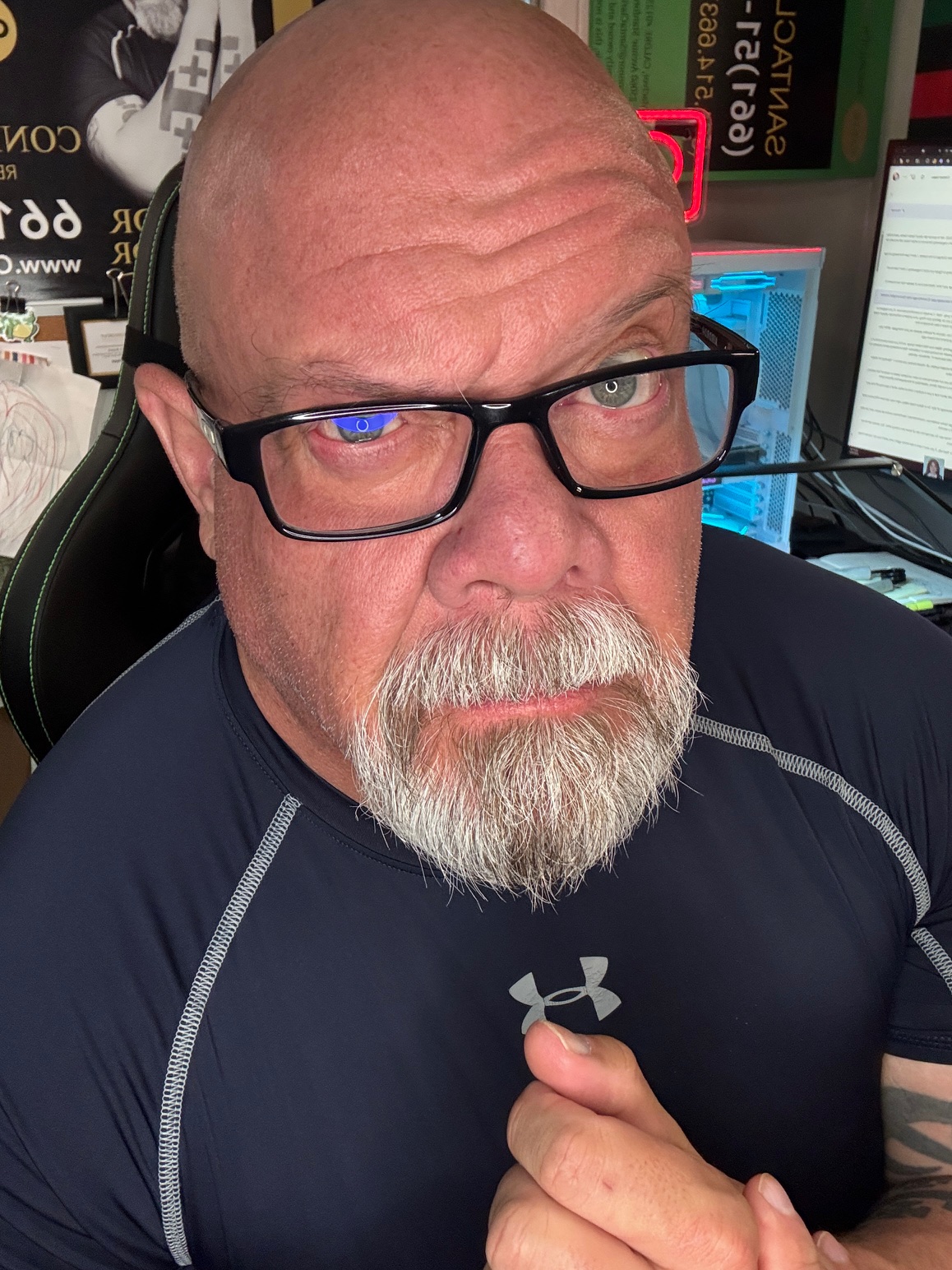
Are you bulking and have you been bulking for over 40 years?
The Uncomfortable Truth About Accountability: Why Public Commitment Is Your Greatest Weapon Against Disease and Addiction
December 2nd, 2025 — A Day of Reckoning
There's something profoundly terrifying about standing naked before the world—not physically, but in every other way that counts. Putting your struggles, your failures, your desperate attempts at transformation out into the public sphere where anyone can see, judge, and comment. Yet this very terror, this vulnerability that makes your stomach churn and your finger hesitate over the "post" button, might be the most powerful tool you have in your arsenal against the diseases and addictions that are slowly destroying you.
Today, I want to talk about something the medical establishment doesn't want you to consider, something that threatens the very foundation of the disease management industrial complex: the cure is already inside you. Not in some mystical, hand-waving sense, but in a very real, biochemical, neurological way. Your body already knows how to heal. The question is whether you're willing to stop listening to those who profit from your perpetual sickness and start listening to yourself.
The Managers vs. The Healers: Understanding Who Benefits From Your Disease
Let me be brutally honest about something that will make some people uncomfortable: there are two types of people in the healthcare and wellness world. There are the managers—those whose entire livelihood depends on you staying sick, staying addicted, staying dependent. And then there are the healers—those rare individuals who actually want you to discover your own power to transform.
The managers are everywhere. They're the doctors who never mention nutrition. They're the addiction specialists who keep you on maintenance medications indefinitely. They're the pharmaceutical companies developing drugs to manage symptoms rather than address root causes. They're the diet industry selling you the next miracle solution while betting on your inevitable failure. They're the food companies engineering hyperpalatable products designed to override your satiety signals and keep you reaching for more.
These managers are dangerous—not because they're necessarily evil people with malicious intent, but because their incentives are fundamentally misaligned with your healing. A patient who cures themselves is a customer lost. A person who discovers they can fast their way back to health doesn't need expensive interventions. Someone who breaks free from addiction through sheer determination and accountability doesn't generate ongoing revenue.
Think about it: the global pharmaceutical industry is worth over $1.5 trillion annually. The weight loss industry alone generates approximately $72 billion per year in the United States. Diabetes management is a $327 billion industry. These aren't industries that benefit from cures—they benefit from management, from maintenance, from your continued dependence.
The Masses Are Wrong: Why Popular Opinion Is Leading You Astray
When it comes to health, disease, and addiction, the masses are catastrophically wrong about almost everything. And I don't say this to be contrarian or edgy—I say it because the evidence is overwhelming and undeniable.
The masses believe that obesity is primarily genetic. They're wrong. While genetics play a role, the obesity epidemic that has exploded over the past 50 years hasn't occurred because human genetics suddenly changed. It's occurred because our food environment, eating patterns, and relationship with nutrition have been systematically corrupted.
The masses believe that Type 2 diabetes is a chronic, progressive disease that can only be managed, never reversed. They're wrong. Thousands of people have reversed their Type 2 diabetes through prolonged fasting, ketogenic diets, and metabolic interventions. But this inconvenient truth threatens billions of dollars in drug sales and ongoing treatment protocols.
The masses believe that addiction is a lifelong disease requiring permanent management and that recovery is a matter of white-knuckling it through life forever. They're partially wrong. Yes, addiction creates lasting changes in the brain, but neuroplasticity—the brain's ability to rewire itself—is real. People can and do fully recover, creating new neural pathways and breaking free from their dependencies entirely. But this doesn't fit the narrative that keeps people in expensive treatment programs indefinitely.
The masses believe that you need to eat frequently throughout the day to maintain metabolism and prevent muscle loss. They're wrong. Intermittent fasting and extended fasting have been shown to preserve lean muscle mass while specifically targeting fat stores, increase human growth hormone production, enhance autophagy (cellular cleanup), and improve insulin sensitivity.
The masses believe that weight loss is simply about calories in versus calories out. They're catastrophically wrong. While thermodynamics certainly plays a role, hormones—particularly insulin—regulate fat storage and utilization in complex ways that make the simple CICO (Calories In, Calories Out) model inadequate for understanding real-world human metabolism.
So why are the masses so consistently wrong? Because they've been taught by the managers. The nutritional guidelines, the treatment protocols, the conventional wisdom—it's all been shaped by industries that benefit from your continued consumption and dependence.
The Power of Public Accountability: Why Shame Might Save Your Life
Now let's talk about something truly uncomfortable: public accountability and the role of social judgment in transformation.
We live in an era that celebrates unconditional acceptance and warns against any form of shame. "Don't shame anyone for their weight!" "Addiction is a disease—judgment helps no one!" "Everyone's journey is different!" And while these sentiments come from a place of compassion, they may actually be enabling the very behaviors that are killing people.
Here's what I've learned through my own struggles with smoking and alcohol, and what I'm learning through my current commitment to transformation: nothing focuses the mind quite like knowing people are watching. Not in a surveillance state, Big Brother way—but in an accountability, "I said I would do this and now people will know if I fail" way.
When you post your starting weight online, when you commit publicly to 30 days without alcohol, when you tell your social media followers that you're quitting smoking—something shifts. Suddenly, it's not just you and your private failures. It's you and your public commitment. The stakes are raised. The potential for embarrassment becomes real.
And before anyone clutches their pearls about the dangers of public shame, let me be clear: I'm not talking about cruel mockery or bullying. I'm talking about the natural human response to public commitment. I'm talking about the motivating force that comes from knowing that your friends, family, and even strangers will see whether you kept your word.
The Brutal Honesty of Social Media
As I mentioned in my video, people will be brutally honest on social media in ways they never would be to your face. Your ears will burn. You'll see the comments. You'll notice the conspicuous silence from some people and the overly enthusiastic support from others that somehow feels patronizing because you've tried and failed before.
And this is exactly what you need.
Because here's the thing: the comfortable lie is what got you here. The reassurance that "tomorrow is another day," the encouragement to "be gentle with yourself," the advice to "take it slow"—all of this well-meaning support often becomes permission to continue the very behaviors that are destroying you.
Sometimes what you need isn't another pat on the back. Sometimes what you need is the cold, hard reality that people are watching, that your failure will be public, and that you need to decide right now whether you're actually committed to change or just playing at it again.
The Lifelong Venture: Why This Is Never Really "Done"
I want to be honest about something else: this is a lifelong venture. Anyone who tells you otherwise is selling something. Whether you're dealing with addiction, obesity, metabolic disease, or any other chronic condition, the work of maintaining health and avoiding relapse is ongoing.
I mentioned in my video that I quit smoking after "hundreds, if not thousands of times" telling myself I was done. Each time I believed it. Each time I failed. Until finally, one day, it stuck. And I still don't fully know why that time was different.
This is the maddening reality of addiction and behavioral change: we don't have perfect control over the moment of transformation. We can create conditions that make it more likely. We can increase our odds. We can stack the deck in our favor. But we can't force it with pure willpower alone.
What we can do is keep trying. Keep recommitting. Keep starting over. Until finally, something clicks.
The Cutting and Bulking Cycle: A Metaphor for Lifelong Struggle
Athletes who intentionally bulk and cut understand something important: transformation is cyclical. You build up, then you cut down. You develop strength, then you reveal it by stripping away the excess. But sometimes—and this is the dangerous part—the cut doesn't happen. The habits you developed during the bulk become permanent fixtures. What was supposed to be a controlled, temporary phase becomes your new normal.
This happens with all kinds of behaviors. You tell yourself you'll eat whatever you want during the holidays and then get serious in January. But January comes and the habits persist. You tell yourself you're taking a break from your diet for a special occasion, but the "occasion" extends indefinitely. You allow yourself to relax your standards "just for now," and suddenly "now" has become a year.
This is how the disease of management thinking infects your psychology. Instead of committing to genuine transformation, you commit to cycles of control and loss of control, believing that you can simply decide when to be disciplined and when to let go. But discipline isn't a faucet you can turn on and off. It's a muscle that atrophies without use and must be continually exercised.
The Commitment Problem: Why Knowing Isn't Enough
Here's a statement that should be obvious but apparently isn't: if we all knew how to make genuine commitments and keep them, there would be no obesity epidemic, no addiction crisis, no explosion in metabolic disease.
But we don't. And this is where most advice fails completely. Everyone wants to tell you what to do—eat less, move more, stop drinking, quit smoking—but almost no one can tell you how to generate and sustain the commitment necessary to actually do these things.
Why? Because genuine commitment is mysterious. It emerges from somewhere we don't fully understand. You can want to change, you can know you should change, you can even understand exactly how to change, and still find yourself unable to do it.
I didn't quit smoking because I suddenly learned it was bad for me—I'd known that for years. I didn't quit drinking because I discovered it was unhealthy—that was never a secret. Something else had to shift first, some internal transformation had to occur before the external behavior could change.
The Role of Rock Bottom (and Why You Don't Need to Wait for It)
Many addiction treatment philosophies emphasize the concept of "rock bottom"—that moment when things get so bad that change becomes inevitable. The DUI arrest. The cancer diagnosis. The cirrhosis. The intervention from family. The hospitalization.
And yes, these dramatic moments do catalyze change for many people. When the consequences become undeniable and immediate, transformation becomes necessary for survival.
But here's what I want you to understand: you don't have to wait for rock bottom. You don't have to get the diagnosis, have the heart attack, lose your job, or destroy your relationships before you decide to change.
I didn't. I quit smoking before the lung cancer. I quit drinking before the cirrhosis or the DUI. I'm addressing my weight before the diabetes diagnosis or the stroke. And you can too.
This is where introspection becomes crucial. This is where you need to stop listening to the managers who benefit from your continued disease and start listening to yourself. Your body is already giving you signals. The fatigue. The brain fog. The joint pain. The difficulty climbing stairs. The shortness of breath. The growing sense that something is fundamentally wrong.
These are your rock bottom if you choose to recognize them as such. You don't need to wait for the dramatic catastrophe. You can decide right now that the subtle decline is unacceptable and that transformation starts today.
The Fasting Solution: A Case Study in Self-Healing
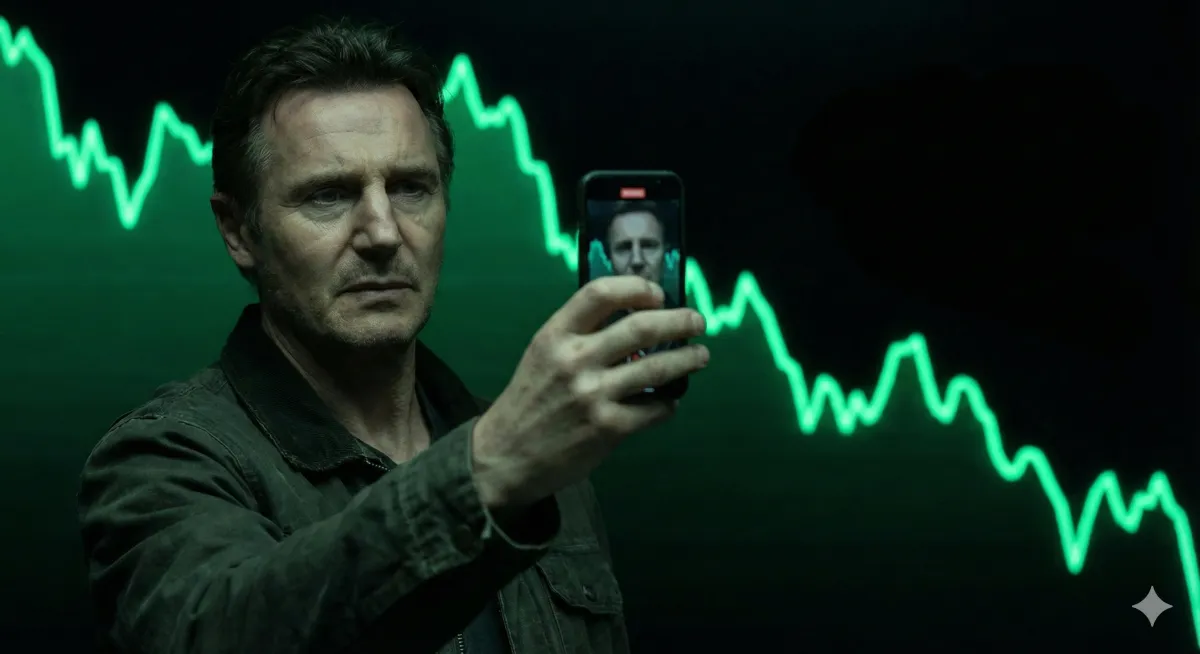
Let me talk specifically about water fasting because it perfectly illustrates everything I've been discussing. In my video, I showed my progress—36.8 hours, day one to day two, with measurable results already visible in green on my chart.
Green is good. Green means progress. Green means the body is doing what it's designed to do: heal.
Water fasting—consuming only water and black coffee, nothing else—is perhaps the most direct way to confront your addictions to processed food, sugar, and overconsumption. It's brutally simple: you just don't eat. And in that simplicity, all your psychological dependencies are revealed.
You realize how much of your eating has nothing to do with hunger. You discover that most of your "hunger" is actually boredom, stress, habit, or emotional avoidance. You learn that the hunger pangs, while uncomfortable, are temporary and survivable. You prove to yourself that you have more control than you thought.
The Science of Fasting: What the Managers Don't Want You to Know
The research on extended fasting is remarkably clear, despite being largely ignored by mainstream medicine:
Insulin Sensitivity Improvement: Fasting dramatically reduces insulin levels and improves insulin sensitivity, directly addressing the root cause of Type 2 diabetes and metabolic syndrome.
Autophagy Activation: Extended fasting triggers autophagy, a cellular cleanup process where your body breaks down and recycles damaged proteins and cellular components. This has profound implications for longevity and disease prevention.
Human Growth Hormone Increase: Fasting can increase HGH production by up to 2000% in men and 1300% in women, helping preserve muscle mass while burning fat.
Inflammation Reduction: Fasting reduces markers of inflammation throughout the body, addressing a root cause of numerous chronic diseases.
Metabolic Switching: Fasting trains your body to efficiently switch between glucose and fat as fuel sources, improving metabolic flexibility.
Mental Clarity: Many fasters report enhanced focus and mental clarity, likely due to the production of ketones, which are actually the brain's preferred fuel source.
So why isn't every doctor prescribing fasting for obesity, diabetes, and metabolic disease? Because there's no profit in it. You can't patent not eating. You can't charge a premium for water. The pharmaceutical and medical industries make nothing from your decision to fast.
This is the perfect example of how the managers have shaped our understanding of health. Fasting—a practice with thousands of years of history across virtually every culture and religion—has been pathologized in modern medicine as dangerous, extreme, or disordered. Meanwhile, taking multiple medications to manage preventable conditions is considered normal and responsible.
The Psychology of Realignment: Proving You Can Break Your Addictions
What fasting provides, beyond the metabolic benefits, is proof. Proof that you can wean yourself from your addictions. Proof that you can endure discomfort for a greater purpose. Proof that you have more strength than you believed.
This is psychological realignment—the process of changing your self-concept from "someone who can't control themselves" to "someone who can do hard things." And this shift is more valuable than any weight loss or metabolic improvement, because it's the foundation for all future transformation.
When you successfully complete even a 24-hour fast, you've proven something profound to yourself: your impulses don't control you. Your discomfort isn't an emergency. You can sit with hunger and not respond to it. You are not a slave to your appetites.
The Difference Between Healthy and Unhealthy Food Addiction
I mentioned in my video that you don't really see people becoming obese from eating too many apples. This is an important distinction that reveals something about the nature of modern processed food.
Whole, unprocessed foods have natural satiety signals. Your body recognizes them as food and eventually tells you to stop eating. Try eating 2000 calories of broccoli or apples in one sitting—you physically can't do it. You'll be full long before you reach that level of intake.
But processed foods—engineered combinations of sugar, fat, salt, and chemical flavorings—override these natural signals. They're designed to be hyperpalatable, to trigger dopamine responses similar to drugs, and to leave you wanting more even when you've consumed more than enough calories.
The obesity epidemic isn't primarily about people eating too much real food. It's about people eating engineered food-like substances that hack their neurological reward systems and override natural satiety signals.
This is why processed food is essentially an addiction, and why treating obesity as simply a matter of "eating less and moving more" misses the point entirely. You need to break the addiction to hyperpalatable processed foods before you can normalize your eating patterns. And fasting is one of the most effective ways to reset these systems.
Public Documentation: The Power of Daily Progress Tracking
In my video, I showed my day-to-day tracking—the visual representation of progress from one day to the next. This kind of documentation serves multiple purposes:
External Accountability: When you post daily updates, you create external pressure to continue. You've made a public commitment, and now people will notice if you stop posting.
Visual Progress: Charts, graphs, before-and-after photos—these provide tangible evidence of change that motivates continued effort. You can see the green. You can measure the progress. It's not just a feeling; it's data.
Pattern Recognition: Daily tracking helps you identify what works and what doesn't. You can correlate your behaviors with your results and adjust accordingly.
Community Support: When you document publicly, you often attract others on similar journeys. You create a community of accountability rather than struggling alone.
Future Motivation: When you inevitably face difficult moments, you can look back at your documented progress and remember why you started and how far you've come.
The Honest Approach: Accepting Non-Perfect Progress
Notice that in my video, I acknowledged that tomorrow might not show perfect progress. "If it's green, we're good. And if it's up a little bit, it's okay too."
This is important. Perfect linear progress is a myth. Weight fluctuates daily due to water retention, sodium intake, stress hormones, sleep quality, and dozens of other factors. Expecting perfectly downward progress every single day sets you up for frustration and potential abandonment of your goals.
The commitment is to the process, not to perfect results every single day. Some days will show great progress. Some days will show minimal progress or even slight reversals. What matters is the overall trend over weeks and months, not the day-to-day variations.
This honest approach to tracking—acknowledging both successes and setbacks—is far more sustainable than the fantasy of perfection that most people attempt and inevitably fail to maintain.
The Introspection Imperative: Why You Must Look Inward
Everything I've discussed leads to this central point: genuine transformation requires introspection, not just information. You already know what you should do. What you don't know is why you're not doing it, and that's a question that can only be answered by looking inward.
The managers don't want you to look inward because introspection leads to self-sufficiency. When you understand your own patterns, triggers, and motivations, you stop needing external management. You become your own healer.
Introspection means asking difficult questions:
Why do I eat when I'm not hungry?
What am I avoiding when I reach for a drink?
What purpose does this behavior serve in my life?
What am I afraid will happen if I change?
Who will I become if I'm no longer defined by this struggle?
What am I gaining from staying sick?
That last question is particularly important and often revelatory. Sometimes our diseases and addictions serve psychological purposes—they provide identity, community, excuse, or protection. Until you understand what you're getting from your dysfunction, you can't effectively address it.
The Danger of External Solutions for Internal Problems
The entire disease management industry is built on providing external solutions for internal problems. Take this pill. Follow this diet. Join this program. Attend these meetings. Track these metrics.
And while some of these external structures can be helpful, none of them address the fundamental internal work that must be done. You cannot outsource transformation. You cannot pay someone to want health more than comfort. You cannot hire someone to be disciplined on your behalf.
The cure is inside you—not in some mystical, magical thinking way, but in the very practical sense that you are the only person who can decide to change and then follow through on that decision. No doctor, no drug, no program can make that choice for you.
The Cure Inside: What This Really Means
When I say "the cure is inside you," I'm making several claims:
Biological: Your body already has the mechanisms to heal from most modern chronic diseases if you stop interfering with those mechanisms. Remove the processed foods, the constant insulin spikes, the inflammatory triggers, the toxic substances—and your body will begin to repair itself.
Psychological: You already have the capacity for the commitment, discipline, and behavioral change necessary for transformation. It's not that you lack these capacities—it's that you haven't fully activated them or you've been discouraged from believing in them.
Spiritual: (And here I use "spiritual" in a non-religious sense, meaning your deep sense of purpose and meaning.) You already know what you value and what kind of life you want to live. The disconnect between your current behaviors and your deepest values is causing psychological distress. Alignment between behavior and values is intrinsically healing.
Social: You have or can create a network of accountability and support that reinforces your commitment to transformation. This isn't something you need to purchase or receive from professionals—it can emerge from authentic relationships and public commitment.
The Action Plan: How to Begin Your Own Transformation
If you've read this far and you're ready to stop being managed and start healing yourself, here's what I suggest:
Step 1: Make a Public Commitment Post on social media. Tell your friends and family. Create accountability that extends beyond your own private thoughts. Make it uncomfortable to fail.
Step 2: Choose One Clear Target Don't try to fix everything at once. Pick one addiction, one disease, one behavior pattern. Make it specific and measurable. "Lose weight" is vague. "Complete a 7-day water fast" is specific.
Step 3: Document Daily Take photos. Record measurements. Track your progress. Share updates publicly. Create a visual record of your transformation.
Step 4: Expect and Accept Discomfort Hunger pains, cravings, withdrawal symptoms, social pressure—these are all part of the process. They're not emergencies. They're not signs that something is wrong. They're signs that something is changing.
Step 5: Ignore the Managers Your doctor might tell you fasting is dangerous. Your nutritionist might say you need to eat every few hours. Your friends might express concern about your "extreme" approach. Unless they can point to actual medical contraindications specific to your situation, recognize this as the voice of the management industry trying to keep you dependent.
Step 6: Practice Introspection Spend time daily examining your thoughts, feelings, triggers, and patterns. Journal about what you're learning. Ask yourself the difficult questions about what your behaviors are providing and what you fear about changing.
Step 7: Measure the Trend, Not the Day Some days will be better than others. Focus on weekly and monthly trends, not daily fluctuations. Green is good, but even when it's not perfectly green, you can still be moving in the right direction.
Step 8: Celebrate Genuine Milestones Not with food or substances, but with recognition of what you've proven to yourself. You did something difficult. You kept a commitment. You're stronger than you thought. This deserves acknowledgment.
The Final Word: Why This Matters
We are in the midst of multiple interconnected health crises—obesity, diabetes, addiction, mental health disorders—that are bankrupting individuals and healthcare systems while enriching the industries that claim to address them. The conventional approaches are failing. The management paradigm is failing.
It's time to try something different. It's time to stop believing the masses who are collectively getting sicker and more dependent. It's time to stop trusting the managers who profit from your perpetual illness. It's time to look inward and discover the cure that's been inside you all along.
This isn't about perfection. It's not about never struggling again. It's about taking ownership of your health, your choices, and your transformation. It's about proving to yourself that you can do hard things. It's about breaking free from the cycles of dependence that keep you sick.
December 2nd, 2025. Day one. Green is good. And tomorrow is another day to prove what you're capable of.
The managers want you to believe you're powerless, that you need their interventions, that genuine healing is impossible without their help. Don't believe them. Your body knows how to heal. You know what you need to do. The only question is whether you'll commit to doing it.
Make it public. Make it uncomfortable to fail. Track your progress. Ignore the naysayers. Look inward. And prove to yourself that the cure has been inside you all along.
If you're ready to stop being managed and start healing, visit fastingbot.com/blog for more resources on fasting, accountability, and genuine transformation. It's time to stop listening to those who profit from your sickness and start listening to yourself.